Abb supports solar, storage, wind, and charging infrastructure with specification-grade disconnects, combiner protection, transformers, inverters, UPS systems, and EV charging assemblies built for disciplined electrical integration.
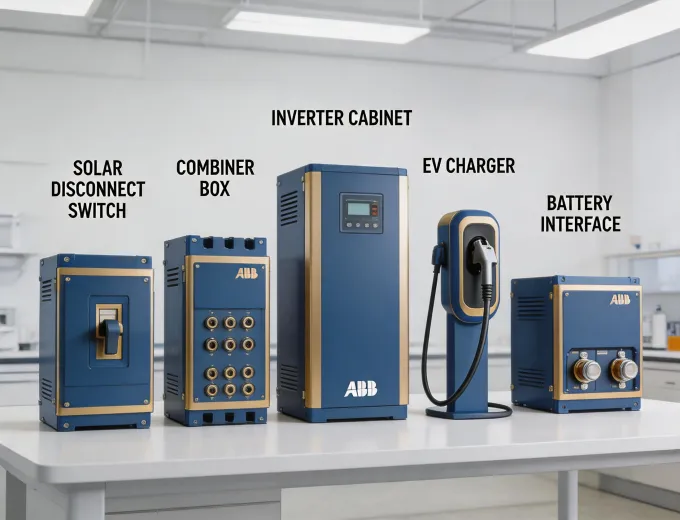
Technical buyers need more than a product list. Abb presents protection, conversion, charging, and storage interfaces in the same specification language used by EPC and utility engineering teams.
Product families are positioned around recognized electrical design practices, including enclosure protection, safe isolation, surge mitigation, and serviceability for renewable energy assets.
Abb keeps product scope tied to bill-of-material decisions: disconnect switch accessories, inverter drives, busbars, current transformers, and EV charging hardware can be evaluated as one connected system.
Operation teams receive installation references, spare-part direction, replacement planning, and support pathways so renewable assets remain maintainable after commissioning.
From rooftop AC disconnects to utility transformer interfaces, the equipment language remains useful for developers, EPCs, electrical contractors, and asset owners.
Yes. The clearest RFQs include the single-line diagram, enclosure environment, voltage class, switching duty, and the inverter or charging equipment being protected.
No. The site gives buyers a structured shortlist. Final approval should use certified datasheets, installation instructions, and project-specific electrical calculations.
Charging projects are reviewed as electrical infrastructure, including upstream protection, metering, transformer capacity, communications, and future load growth.
Share site voltage, current rating, utility interconnection notes, ambient conditions, enclosure location, target certifications, and expected maintenance access.
Yes. Battery storage, UPS systems, and critical load panels should be reviewed together where ride-through, backup, and protection coordination overlap.
The language is written for international renewable buyers and can be adapted to local approval requirements, installer practices, and grid codes.
Procurement teams compare incompatible disconnect ratings, inverter interfaces, transformer assumptions, and EV charger load profiles. Late changes can force redesign after vendor selection.
Unstructured RFQs also make it harder to verify enclosure ratings, safety access, spare-part planning, and commissioning evidence.
Project teams can align BOS, conversion, charging, and storage equipment around a documented electrical scope before commercial negotiation begins.
Send Project Parameters