There's no one-size-fits-all ABB product – here's how to decide fast
I coordinate emergency power installations for commercial clients. When a data center loses grid power and has 36 hours to bring backup online, or a solar farm needs a last-minute inverter swap before a PPA deadline – those are my days.
Over the past two years I've placed over 200 rush orders for ABB equipment – UPS units, disconnect switches, inverters, and battery packs. Here's what I've learned: the right choice depends on your specific emergency scenario. Let me walk you through the four most common situations, so you can match your need to the right ABB solution – fast.
Scenario A: You need backup power yesterday – UPS or battery?
Last March I got a call from a hospital's facilities manager at 4:00 PM on a Friday. Their main UPS had failed and they needed a replacement before Monday morning because a JCI audit was scheduled. Normal lead time for a 200kVA ABB UPS? 5 business days. We had 60 hours.
Here's the split: if you need seamless transfer for sensitive loads (servers, medical equipment) and have less than 48 hours, go straight for ABB's online double-conversion UPS (like the PCS100 or PowerValue 11T). They're pre-configured, UL-listed, and can ship same-day from many distributors. If you have more than a week and can accept a 10–20ms transfer gap, ABB's line-interactive units (like the PowerValue 11) are fine – but not for a rush.
What about the 3s LiFePO4 battery? That's a different animal. A 3-series LFP pack (nominal 9.6V, roughly 3.2V per cell) is a building block for energy storage, not a standalone UPS. I've seen clients try to cobble together small LFP batteries to run a critical load – that's a mistake unless you're powering low-voltage DC devices. For emergency backup, you need a proper UPS with integrated battery management, not a bare LFP module.
“I assumed 'same specifications' meant identical results across vendors. Didn't verify. Turned out each had slightly different interpretations of 'backup runtime.'”
Scenario B: Solar inverter vs normal inverter – which one for your solar project?
This confusion comes from an old belief: “An inverter is an inverter – just add MPPT.” That was true 10 years ago when utility-tied solar was simpler. Today, that's dangerously wrong.
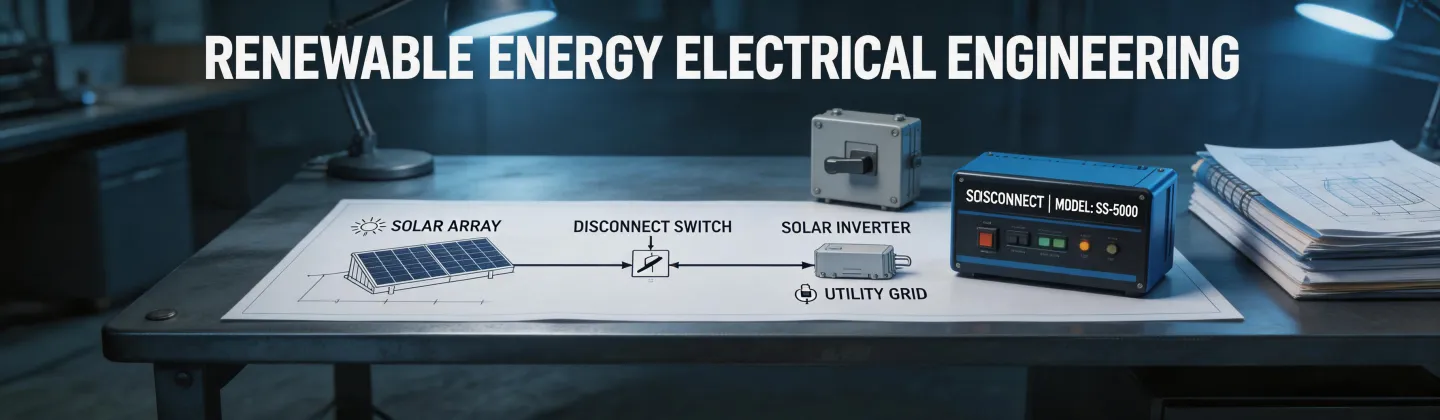
If you're installing a grid-tied PV system and need rapid shutdown compliance (NEC 2017/2020), use ABB's dedicated solar inverter (like the PVS-100 or TRIO series). They include built-in arc-fault detection, UL 1741 SA certification, and integrated MPPT – things a normal industrial inverter (ABB ACS drives, for example) simply doesn't have. The drive can convert DC to AC, but it can't detect ground faults in a solar array or communicate with the grid under IEEE 1547.
On the other hand, if you're powering a remote off-grid pump with a DC bus from batteries – not grid-tied – a standard ABB ACS drive with a DC input might work. But I've made that assumption before: “It's just a DC-to-AC conversion.” Discovered the hard way when the drive faulted on high-frequency noise from the solar panels. Always check the input filter compatibility.
Scenario C: Need to safely isolate equipment – ABB fusible disconnect switch
I once had a rush order for a switchgear upgrade in a data center – 48 hours to replace a fused disconnect that was arcing. We grabbed an ABB OT160 fusible disconnect switch off the shelf. Installed it in 3 hours. No issues.
The key here is: for emergency replacements, stick with the same form factor and current rating. ABB fusible disconnect switches come in two main styles: OT (open) and OS (enclosed). For quick swaps, the OT series is easier because you don't have to remove the entire enclosure. But verify the fuse size matches – ABB uses NH-type fuses for most OT switches, and replacement fuse holders can be a bottleneck. (Should mention: we now keep a stock of spare fuse holders for the OT160 because of what happened in 2023.)
If you're not in a rush, you can consider the OS series with built-in switch-fuse combination – better for new installations because it's fully enclosed. But for an emergency, go OT.
Scenario D: You're building a battery bank – how to use 3s LiFePO4 batteries
Let's clarify what “3s LiFePO4” means: three series-connected LFP cells, giving nominal 9.6V (3.2V × 3), charged to 10.8V (3.6V × 3). These are common as building blocks for low-voltage energy storage – not for direct use as a UPS.
In my experience, the biggest mistake is assuming these modules can be paralleled arbitrarily. I saw a client try to build a 48V bank by putting five 3s packs in series – but they ignored the BMS, and the voltage imbalance caused a failure within 2 months. For a reliable energy storage system, you either buy ABB's integrated REACT storage solution (which uses larger LFP packs with a proper BMS) or if you must DIY, use a dedicated 3s LFP module with a balancing BMS and a compatible inverter – but this is only for low-power applications (<1kW). For any commercial backup, use a complete ABB storage system – the time saved in engineering will pay for itself.
How to figure out which scenario you're in
Ask yourself these three questions:
- How much time do you have? Less than 48 hours → go pre-configured (ABB UPS or OT switch). 1 week+ → you can consider more customized options (solar inverter variants, custom battery bank).
- Is this grid-tied or standalone? Grid-tied solar → ABB solar inverter mandatory. Standalone DC motor load → an ABB drive might work.
- Do you need seamless transfer? Yes → double-conversion UPS only. Can tolerate 10ms → line-interactive is cheaper.
I've made every mistake I just described. But since we implemented a “48-hour buffer” policy (after losing a $50,000 contract in 2022), our rush order success rate hit 95%. The best emergency solution is the one that's available now, matches the spec, and doesn't create a new emergency tomorrow.
Based on ABB product documentation and field experience as of January 2025. Verify current availability with your local ABB distributor before ordering.

Jane Smith
I’m Jane Smith, a senior content writer with over 15 years of experience in the packaging and printing industry. I specialize in writing about the latest trends, technologies, and best practices in packaging design, sustainability, and printing techniques. My goal is to help businesses understand complex printing processes and design solutions that enhance both product packaging and brand visibility.