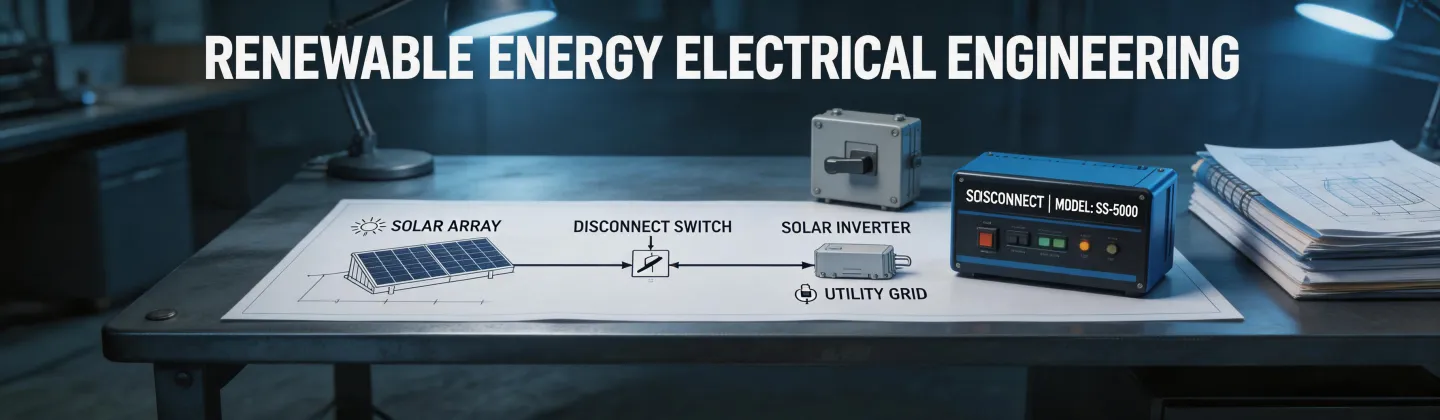
The Problem That Wasn't on My List
Last year, I was tasked with buying a new set of solar inverters for our office expansion. Simple enough, right? I'd read all the spec sheets, compared wattage and efficiency. But the one thing I never thought about? The color of the solar system.
Our building's facade has a strict aesthetic guideline — all rooftop equipment must be in a specific shade of dark grey, matching the exterior trim. The inverter I ordered was standard industrial beige. When the installer pointed it out, I had a sinking feeling. The vendor said they could get a custom color, but it meant a 6-week lead time and an extra $800. Finance wasn't happy.
That's when I realized: procurement in renewable energy isn't just about spec sheets. It's about the thousands of small decisions that add up to a successful project. And most of the advice I'd gotten was oversimplified.
The Deeper Issue: We Only Think About One Dimension
Everything I'd read about buying solar inverters, wind turbines, or battery storage focused on two things: price per watt and efficiency rating. That's what the sales reps push. But in practice, the real problems come from things that aren't on the datasheet.
Take ABB busbars, for example. When we started upgrading our wind turbine connections, I assumed any busbar with the right amp rating would work. But the physical layout of our switchgear required a specific form factor — the busbar had to fit into a pre-existing enclosure. The ABB rep pointed out that their busbar system offers modular sections that clip together without welding. That saved us three days of field fabrication. But if I'd just bought the cheapest generic busbar, we'd have been stuck with a lot of extra labor and downtime.
The same goes for ABB wind turbine components. Everyone talks about turbine power curves, but nobody mentions that the pitch control system and the grid compliance modules need to match your local utility's requirements. In Illinois, for instance, there are specific interconnection standards that vary by county. I didn't know that until our first turbine failed the grid integration test.
The Real Cost of Ignoring the Details
Let me give you a concrete example. I was managing a project that involved a 500 kW battery storage system. We needed a specific ESS battery stock — lithium iron phosphate (LFP) cells with a particular cycle life. The cheapest supplier had them in stock, but they were from a batch that had been sitting in a warehouse for 18 months. The vendor assured me they were fine. Three months after installation, the battery management system reported capacity degradation of 8% — well beyond the normal 2-3%. We had to replace the modules at our own cost. That mistake cost us about $18,000 in materials and another $4,000 in labor. All because I didn't verify the manufacturing date of the battery stock.
The most frustrating part? I'd seen similar issues before with other equipment. But experience doesn't stick until it burns you. That's the truth of procurement — the lesson you learn the hard way is the one you remember.
When ABB Doesn't Fit (And Why That's Okay)
Here's where I have to be honest: ABB isn't the right answer for every situation. If you're a small repair shop buying a single inverter every two years, the extra cost of going through an ABB-authorized distributor might not make sense. Their support network is designed for medium-to-large B2B operations that need ongoing service and spare parts availability.
But if you're managing a portfolio of renewable assets — say, a commercial solar farm with 500+ inverters, or a wind project with multiple turbines — the consistency of ABB's product line becomes a huge advantage. You can standardize on busbars, switchgear, inverters, and even the enclosure colors (yes, they offer RAL and Pantone matching for their outdoor cabinets).
I've learned to ask the right questions now: "What's the lead time for a custom color? How long has this battery stock been on the shelf? Does this wind turbine inverter meet ComEd's interconnection requirements?" These aren't the obvious questions, but they're the ones that separate a smooth project from a costly headache.
The Bottom Line
When I look back at my biggest procurement mistakes, the common thread is assuming the obvious dimensions are the only ones that matter. Price and efficiency are important. But so is the color of your solar system, the batch date of your batteries, and the form factor of your busbars.
To put it in perspective: there are currently over 3,500 wind turbines installed in Illinois (source: American Clean Power Association, Q3 2024 data). That's a lot of rotating machinery that needs reliable electrical infrastructure. The companies that operate those turbines didn't cut corners on busbars or inverters — they picked components that integrate seamlessly. That's the value of looking beyond the spec sheet.
If you're in the middle of a renewable energy procurement right now, here's my advice: spend 20% of your time on the specs and 80% on the deployment context — the color, the fit, the stock age, the local standards. That's where the real risk lives. And if you want a partner who can help you navigate all those details, ABB's portfolio covers inverters, busbars, switchgear, UPS, transformers, and energy storage — all designed to work together. But only if that's what your project actually needs. Otherwise, find a different solution. I'd rather tell you the truth upfront than watch you discover it the hard way.

Jane Smith
I’m Jane Smith, a senior content writer with over 15 years of experience in the packaging and printing industry. I specialize in writing about the latest trends, technologies, and best practices in packaging design, sustainability, and printing techniques. My goal is to help businesses understand complex printing processes and design solutions that enhance both product packaging and brand visibility.