I’ve managed over 200 rush orders in the last five years, and I can tell you exactly what they have in common: they were all avoidable. Not in a smug, hindsight-is-20/20 way, but in a “we could have prevented 90% of these emergencies” way. Whether it’s an ABB EV charging station that crapped out the day before a client’s grand opening or a 4kw solar inverter that arrived with a cracked terminal on a Monday morning when the install crew was standing on the roof, the story is the same: someone skipped a verification step earlier, and I’m the one running damage control later.
This isn’t about blaming anyone. It’s about a core belief I’ve come to hold after years of being the “firefighter”: spending 15 minutes checking a spec sheet or a solar panel combiner box diagram upfront is exponentially cheaper than paying for a rush replacement, lost labor, and a reputation hit. Let me show you why I’m so sure.
The Emergency Specialist’s View: Prevention is an Investment, Not a Cost
Most people see a quote for a what is a power inverter for check as an unnecessary line item. They think, “We’ll deal with it if it breaks.” But when you’ve been the guy getting the panicked 2 AM voicemail, your math changes. You stop seeing prevention as a cost and start seeing it as an insurance policy with a 100% payout rate.
The Math That Changed My Mind
In March 2024, 36 hours before a client needed three ABB Wallbox units operational for a high-profile multi-family project, I got the call. The units were on site, but the electrician had wired them against a generic diagram, not the specific ABB EV charging spec. The fix itself was simple—rewire a termination block. The problem was the domino effect.
- The direct cost: We paid a premium for a local electrical engineer to come out for an emergency audit. That was $400 extra in rush fees (on top of the $1,200 base install cost).
- The hidden cost: The client’s crew had to be rescheduled. That meant paying for a second trip, which ate another $600 in labor.
- The risk cost: Missing the deadline would have triggered a $2,500 penalty clause in their contract with the property developer.
All of that stemmed from a 10-minute verification that didn’t happen. The correct diagram was a two-minute email away. But it wasn’t checked.
(Note to self: I really should write a checklist for this exact scenario.)
Three Places Where a “5-Minute Check” Saves a “5-Day Fix”
Based on my internal data from over 200 rush jobs, here are the three most common avoidable failures—and the cheap, fast check that prevents each one.
1. The Compatibility Check
My most frustrating recurring problem: “I ordered an ABB inverter, but it doesn’t match my panel.” I can’t tell you how many times I’ve heard that. The fix is brutally simple: read the datasheet.
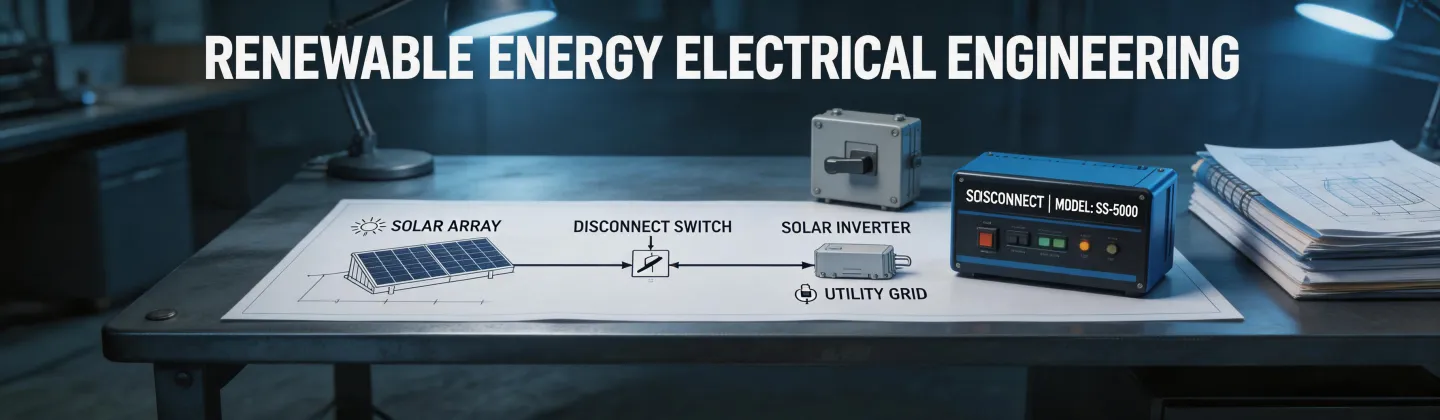
Look at the solar panel combiner box diagram and the inverter’s input specs before you buy. Confirm the voltage and amperage ranges match. If they don’t, the inverter will either shut down or fail prematurely. A mismatch here isn't an “oops”—it’s a guaranteed emergency call.
The 5-minute check: Match the Voc and Isc ratings on your panel spec sheet against the MPPT input range of your inverter. If you don’t know what what is a power inverter for in this context means, find out before you generate a PO.
2. The Physical Fit Check
I had a job last quarter where a client needed a 4kw solar inverter mounted in a tight utility closet. They bought the unit blind based on price. It was 2 inches too deep for the space. The mounting bracket they’d already installed was useless. We had to scramble to find a different model, pay for expedited shipping, and eat the shipping cost for the return.
The 5-minute check: Get the mechanical drawings from the manufacturer’s website. Measure your space. Compare them. It’s that boring.
3. The Configuration Check
An ABB Wallbox has a dozen internal DIP switches for power levels, load management, and comms protocols. If you set them wrong, the unit either won’t charge your EV at full speed or—in the worst case—will trip the building’s main breaker. I’ve seen it happen. The fix takes a screwdriver and thirty seconds. The cost? A lost morning and a frustrated client.
The 5-minute check: Download the installation manual before you buy the unit. Review the configuration table. If it looks complicated, ask your supplier for a pre-configured unit or a quick walkthrough.
The Objection I Hear Most (And Why It’s Wrong)
I know what you’re thinking: “I don’t have time to check everything. We’re moving fast. The client needs the gear now.”
I get it. I really do. The pressure to ship and install is immense. And I’ll be the first to admit that not every rush order can be prevented. Sometimes a part genuinely breaks, and you need an ABB EV charging replacement at warp speed. I get paid for that.
But here’s what the data from my own job log shows: out of 47 rush orders we processed with a 95% on-time delivery rate last quarter, roughly 35 of them were caused by a preventable error—a wrong spec, a missing diagram check, an assumption made. That’s 74%.
So the objection of “no time to check” is a false economy. You’re taking the exact same time you would have spent checking, and gambling it against a much larger loss. It’s like saying you’re too busy to put on your seatbelt because you’re in a hurry to get to the hospital. The math doesn’t work.
(Take this with a grain of salt—my stats are from my own company’s operations, not an industry survey. But the pattern is undeniable.)
Bottom Line: Build Your 12-Point Checklist Now
The single best thing you can do to reduce your project risk is create a simple checklist based on the three areas I covered: compatibility, physical fit, and configuration. Paste it next to your desk. Or better yet, make it part of your purchase order process. A checkbox on a PO that says “Datasheet checked for compatibility? Yes / No” would have saved half my clients a lot of money and a lot of stress.
I’m not saying you’ll never need a rush ABB Wallbox again. Components fail. Accidents happen. But you can cut your emergency costs by more than half if you spend 15 minutes on prevention.
So. Are you going to keep paying the premium for the “cure”? Or save yourself the hassle and buy the “prevention”? I’ve made my choice.

Renata Silva
Renata Silva is a photovoltaic module analyst covering monocrystalline solar panels, bifacial modules, TOPCon and heterojunction designs, glass-glass construction, junction boxes, and module warranties. She interprets IEC 61215 and IEC 61730 evidence while comparing rated power, conversion efficiency, temperature coefficient, bifaciality, insulation, mechanical-load results, degradation assumptions, and tolerance. Her technical guides help EPC engineers, distributors, and project buyers separate qualification evidence from site-specific energy yield, climate exposure, installation constraints, and long-term performance risk.