If you're responsible for buying equipment like EV chargers, solar inverters, or industrial UPS systems for your company, this checklist is for you.
It's for the person who gets the quote, runs it by finance, and then has to make it work in the real world. I’m an office administrator who manages our renewable energy and electrification equipment purchases. In my first year, I made a classic mistake: I bought the cheapest solar inverter. The sticker price was great. But after the shipping, the special mounting brackets we didn't know we needed, and the consultant's fee to get it to actually talk to our existing system, that 'cheap' inverter cost us more than the premium model I was trying to avoid.
That experience taught me to look at the Total Cost of Ownership (TCO). Here's my 5-step checklist to avoid my rookie errors and spot a good deal from a costly one.
When to Use This Checklist
Use this when you are comparing quotes for any major piece of gear: a new DC fast charger (like an ABB Terra DC Wallbox), a string inverter (like the ABB PVS-30-TL-SY), a power transformer, or even a batch of smart meters. If the decision involves installation, integration, or ongoing maintenance, skip the unit price comparison and use this instead.
The 5-Step TCO Checklist
Step 1: Unpack the True Unit Price
This seems obvious, but the 'unit price' on the quote is rarely the final cost. You need to ask for the price inclusive of standard packaging and standard freight. I once received a quote for wind inverters that looked great until I saw the freight charge was separate and more than the unit cost.
What to check:
- Shipping & handling: Is it FOB (Free on Board) or Delivered Duty Paid (DDP)?
- Minimum order quantities: Are you forced to buy more than you need, creating inventory cost?
- Payment terms: Net 30 is standard. If they demand Net 15, that's a cash-flow cost.
Step 2: Calculate the 'Fit' Cost (Integration & Installation)
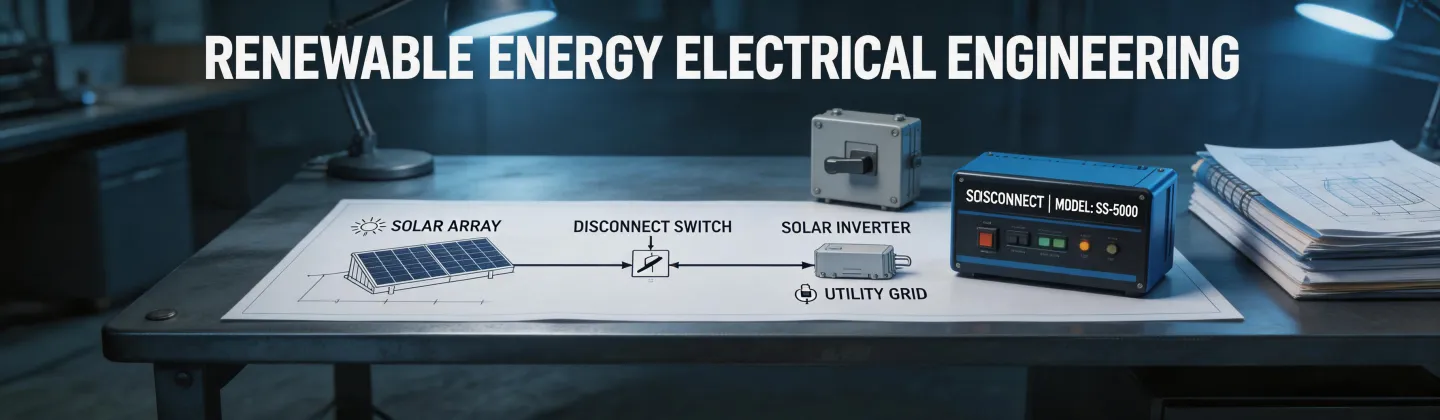
This is the step most people ignore. That $700 ABB wallbox is a no-brainer until you realize your facility needs a specific communication gateway or a different kind of disconnect switch to pair with it. I spent a frustrating afternoon trying to force a smart meter from one ecosystem to work with our building management system. It didn't. We had to buy a converter box.
The key question: What else do you need to buy to make this product work? Ask the vendor for a full 'Bill of Materials' for the installation, not just the main unit.
Step 3: Estimate the 'Surprise' Costs (Risk & Redoing)
This is where the total cost thinking really kicks in. The lowest-priced surge protector might fail in 18 months, costing you the labor to diagnose it, replace it, and potentially damage the downstream equipment it was supposed to protect. In my world, the $500 quote turned into $800 after the vendor couldn't provide a proper invoice for a customs clearance, and then a setup fee appeared.
Ask the vendor:
- What is the mean time between failures (MTBF) for this unit?
- What is the standard warranty, and what does it cover (parts, labor, on-site)?
- Is their technical support responsive? A week of downtime waiting for a fix is a cost.
Step 4: Factor in the Time Sink (Administrative Cost)
This is a soft cost that's very real for an admin buyer. A vendor with a clunky ordering system—requiring manual POs, paper invoices, and 3-way matching—costs your accounting department hours. I once worked with a small supplier who had a great price on installation products, but they couldn't send a digital invoice. Finance rejected it. I ate the cost. The extra $400 in 'hidden' time and rejected expenses made the 'cheap' product expensive.
Preference checklist: Does the vendor offer online ordering? Are their invoices digital and clear? Do they accept procurement cards?
Step 5: Calculate the Exit Cost (Disposal & Sunset)
This is for bigger gear like UPS systems or large transformers. What happens when this unit reaches end-of-life? Does the vendor have a take-back program? Is the lithium battery recyclable? A vendor who leaves you with a disposal hassle or a hazardous waste bill has a higher TCO. A product like an ABB charger might have a program for responsible disposal of its internal battery, which saves you that worry.
Common Mistakes to Avoid
The 'I'll Just Buy the Adapter' Fallacy: I've seen this trip people up repeatedly. 'Oh, this ABB wind inverter is a steal, we just need a small converter for our voltage.' That 'small converter' can be a custom-order item that costs half the price of the inverter and takes 6 weeks to arrive. Always price the adapters and peripherals before you buy the main item.
Forgetting About Your Own Team's Productivity: The biggest cost isn't always the gear. It's the meeting time. The five hours you spend arguing with a vendor who won't standardize their shipping process is a cost to your department. A smoother process from a vendor like ABB, with a clear online portal and standardised support, saves you that hidden time cost.
Bottom line? The next time you see a 'cheaper' quote for a solar panel, EV charger, or switchgear, ask yourself: Is this the lowest total cost, or just the lowest unit price? Use this checklist, and you'll stop overpaying—even when the sticker price looks lower.

Jane Smith
I’m Jane Smith, a senior content writer with over 15 years of experience in the packaging and printing industry. I specialize in writing about the latest trends, technologies, and best practices in packaging design, sustainability, and printing techniques. My goal is to help businesses understand complex printing processes and design solutions that enhance both product packaging and brand visibility.