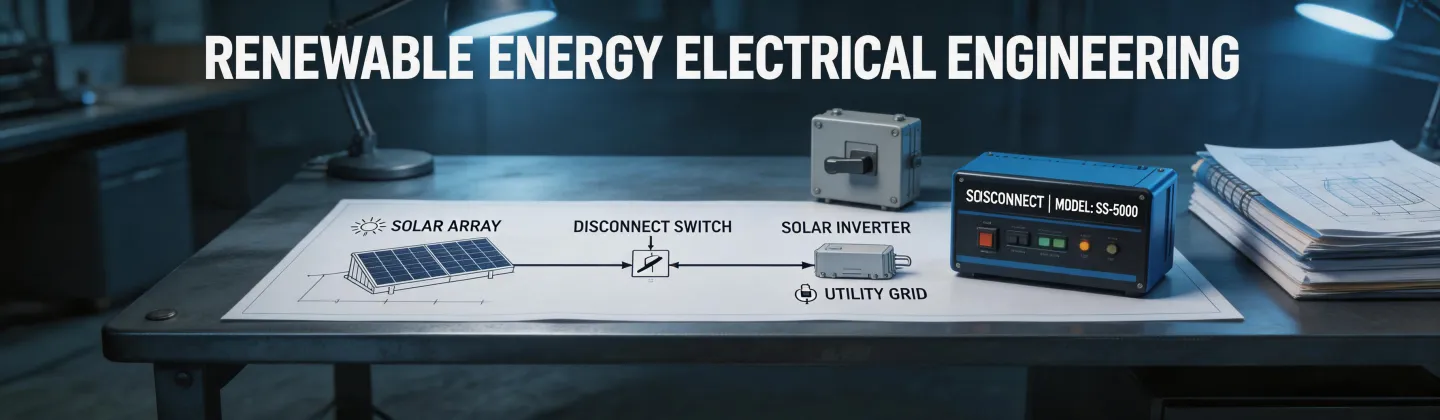
The most expensive lesson I've learned in renewable energy wasn't about panel efficiency or battery chemistry. It was about what happens when you treat a utility-scale energy storage system as a pile of parts instead of an integrated electrical ecosystem.
I'm a project engineer who's been handling procurement and specification for utility-scale BESS (Battery Energy Storage Systems) for about six years now. In my first year—2019—I managed to waste roughly $22,000 across a single 10 MW project by specifying components that were individually 'best-in-class' but collectively a nightmare to integrate. That mistake taught me more about the actual meaning of 'reliability' than any whitepaper ever did.
Here's the thing: people think reliability comes from choosing the highest-rated inverter or the most efficient transformer. Actually, for utility-scale storage, true reliability comes from the engineering of the interfaces between components—which is exactly where an integrated portfolio like ABB's earns its keep.
The Assumption That Cost Me
My assumption was simple: I'll pick the best solar inverter I can find (an ABB PVS-980, for argument's sake), combine it with a top-tier transformer from a specialist manufacturer, add a medium-voltage switchgear from another brand, and then specify the auxiliary controls and monitoring separately. The sum of great parts should equal a great system, right?
Wrong. The reality is that the sum of great parts can equal a system that refuses to communicate, requires custom engineering for every protective relay coordination study, and takes three weeks longer to commission than planned.
In my case, the problem was a ground fault protection coordination issue between the transformer's protective relay and the inverter's internal monitoring. Each device was perfectly functional. But the logic for what constituted a 'fault' and what was a 'normal transient' wasn't aligned. The result was nuisance tripping that took a team of three engineers six days to troubleshoot. The cost? $12,000 in engineering time, plus a week of delayed commissioning while the system was down. Add in the rush costs for a replacement control board that the third-party integrator insisted we needed (we didn't), and the total was north of $22,000.
The Contrast Insight: Integrated vs. Aggregated
When I compared that project to the next one—where we specified an ABB e-House solution that included the PCS, transformer, MV switchgear, and controls as a single, pre-integrated package—the difference wasn't subtle.
Seeing the commissioning timeline side-by-side (six weeks of headaches vs. two weeks of routine checks) made me realize that the value wasn't in the hardware itself. It was in the fact that the protective relay and the inverter had been designed to talk to each other before they ever left the factory. The ground fault coordination? Already tested. The communication protocol mapping? Already done. The bill of materials for the auxiliary systems? Already accounted for.
This is the key insight that the 'pick and mix' approach misses: energy storage systems fail most often at the interfaces. The AC/DC conversion stage, the transformer connection, the grid interconnection point—these are where mysterious alarms and unexplained trips happen. An integrated supplier like ABB, which makes the inverter, the transformer, the switchgear, and the control software, has a deep incentive to make those interfaces work seamlessly. A collection of specialist vendors has an incentive to make their individual boxes work. Those are not the same thing.
Why This Matters for Your P&L
The most obvious cost of a poorly integrated system is the engineering time to fix problems. But that's the tip of the iceberg.
There's also the cost of delays: every day your BESS isn't exporting to the grid is a day you're not getting paid for ancillary services or energy arbitrage. On a 10 MW system at a typical market rate, that's several thousand dollars in lost revenue per day. A three-week integration delay that could have been avoided? That's real money.
Then there's the hidden cost of spare parts management. With three different vendors, you need three different service contracts, three sets of spares, and three different technical support lines. With an integrated solution, you have one point of contact. In five years of running projects with integrated ABB solutions, I've found that the total cost of ownership (TCO) is almost always lower, even if the initial line-item cost appears higher.
This is where the transparency idea comes in: the vendor who shows you the total cost of ownership—including the value of pre-integration, single-source support, and tested interfaces—is giving you a better deal than the vendor who just shows you a low price on an inverter and expects you to figure out the rest.
When an Integrated Portfolio Isn't the Answer
I don't want to overstate my case. An integrated portfolio like ABB's isn't always the right choice. It depends on your scale and your internal engineering capabilities.
If you're a developer with a large, experienced engineering team that specializes in custom system integration—and you're building a one-off, experimental project—then maybe the 'best-of-breed' approach makes sense. You have the in-house talent to manage the interfaces and the time to optimize every last watt.
However, for most utility-scale projects—where time is money, reliability is paramount, and your engineering team is already stretched—the peace of mind that comes from a supplier who has already solved the integration puzzle is worth a premium.
I've learned to ask a different question of my vendors now. I don't ask about the inverter's efficiency curve first. I ask: 'Show me the bill of materials for the entire electrical system from the battery terminals to the grid connection point. What's included? What's not included? What are the interfaces you've already tested?' The vendor who can answer that question clearly—even if their total price looks higher—usually costs less in the end.

Jane Smith
I’m Jane Smith, a senior content writer with over 15 years of experience in the packaging and printing industry. I specialize in writing about the latest trends, technologies, and best practices in packaging design, sustainability, and printing techniques. My goal is to help businesses understand complex printing processes and design solutions that enhance both product packaging and brand visibility.