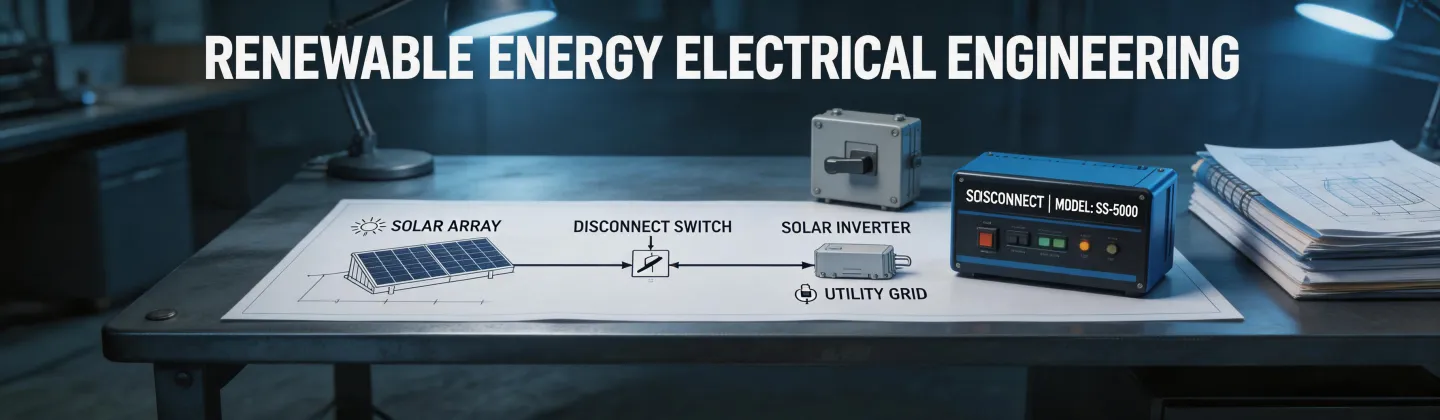
The $800 Switch That Cost $2,400
I remember the order clearly. March 2023. A rush request from our facilities team for a specific ABB disconnect switch—a product number I'd ordered maybe twice before. I found a great price online from a distributor I hadn't used. $800. I thought I was doing my job.
I wasn't.
What I'd ordered was the switch itself. What arrived was a cardboard box with a switch inside it. No mounting hardware. No busbar clip connectors. The terminal covers were an optional extra. The invoice? A handwritten receipt. Finance rejected the expense report. I ate the cost of the rush shipping for the correct components out of my department budget. Total: $2,400. The lesson: a disconnect switch isn't a 'switch.' It's a system.
Surface Problem: The Sticker Price Trap
The surface problem is obvious. You look up 'abb disconnect' or search for 'abb disconnect switch price,' find a quote that's 15% lower than your usual vendor, and you pull the trigger. It feels like a win.
But for someone like me—processing 60-80 orders annually across 8 vendors for a 200-person company—the surface problem is just the entry point. The question isn't 'Which switch is cheaper?' The question is 'What is the total cost of getting a functional, code-compliant disconnect installed?'
When I took over purchasing in 2020, I made this mistake on three separate orders before I realized the pattern. I was comparing apples to oranges, and my accounting team was paying for it.
Deep Root 1: The Incompatibility Trap
Here's the first thing I learned the hard way: ABB disconnect switches aren't a single product line. They're a family of components designed for specific busbar systems, enclosure types, and voltage ratings. An OTM32F3N for a 3-phase system isn't interchangeable with a similar-looking switch from a different series, even if the amperage rating is the same.
The deep problem is that 'standard' doesn't mean 'standard' to every vendor. I said 'standard 100A disconnect.' They heard 'cheapest 100A disconnect they could drop-ship.' We were using the same words but meaning completely different things. I discovered this when the electrician couldn't mount the switch to our existing busbar clip connector setup.
“What I mean is that the 'cheapest' option isn't just about the sticker price—it's about the total cost including your time spent managing issues, the risk of delays, and the potential need for redos.”
This gets into technical territory that's honestly not my expertise. I'm not an electrical engineer. What I can tell you from a procurement perspective is this: verify compatibility before you click 'buy.' Call your supplier and read them the specs of your existing system. If they can't confirm compatibility in 5 minutes, that's a red flag.
Deep Root 2: The Hidden Add-On Economy
The second deep reason why a 'cheap' switch isn't cheap is the add-on economy. ABB's disconnect switch ecosystem includes:
- Base switch unit (what you think you're buying)
- Mounting brackets and hardware (often sold separately)
- Busbar clip connectors (required for panel mounting)
- Terminal shields and safety covers (often required by code)
- Door interlock kits (if applicable)
- Padlock hasps (safety lockout)
In my experience, these add-ons can increase the real cost of the installation by 30-50% over the base switch price. The distributor offering the 'best' price on the base unit might be significantly more expensive on the accessories. It's a classic bait-and-switch—pardon the pun.
I've only worked with domestic vendors for these components, so I can't speak to how this applies to international sourcing. But if you're comparing quotes, ask for a 'complete kit' price, not just the switch. The $500 quote that becomes $800 after add-ons? That's the one to watch out for.
The Cost of Getting It Wrong
Let me put a number on the 'cost of wrong.' From my experience across roughly 50 electrical component orders:
Scenario 1: Order the wrong switch. You're out the cost of the switch ($400-800 for a standard 100A unit). Plus return shipping ($30-60). Plus the rush fee for the correct replacement (+50% or more). Plus the electrician's time for the rework ($150-300). Total cost of error: $700-1,200.
Scenario 2: Order the right switch but wrong mounting hardware. You've got the switch. You can't install it. The electrician charges for the second trip. You need a local electrical supply house to source the busbar clip connector. Total cost of error: $200-500.
Scenario 3: Order a switch that's not UL-listed for your application. This is the nightmare scenario. Inspection fails. Project delays. Contractor blames you. VP asks questions you don't want to answer. Cost of error: impossible to quantify, but easily in the thousands when you factor in reputation damage.
The unreliable supplier who couldn't confirm UL listing cost me more than just money. It made me look bad to my VP when installation materials arrived incomplete.
So, What Actually Works?
After five years of managing procurement for electrical components, I've come to believe that the 'best' switch is the one that arrives complete, compatible, and certified. Here's what I now do:
Verify the system first. Before I search for 'abb disconnect,' I confirm the exact model of our enclosure, busbar spacing, and voltage requirements. I keep an equipment spec sheet in my procurement folder. It took me an hour to set up. It's saved me dozens of hours in back-and-forth.
Ask for the total kit price. I now calculate TCO before comparing any vendor quotes. The base switch price is just the starting point. I ask suppliers to quote the complete installation: switch, mounting kit, busbar clip connectors, terminal covers, and shipping. The vendor with the highest base price often has the lowest total.
Check the source. Is the vendor an authorized ABB distributor? If not, I'm skeptical. Counterfeit ABB disconnect switches are a real thing. The savings aren't worth the risk of a fire or a failed inspection.
Build the relationship. I found a supplier who actually knows the product line. They know my busbar system. They know which add-ons I need. They proactively flag incompatibilities. That relationship is worth more than a 10% discount from a cheaper vendor.
The way I see it, the $800 switch that comes with everything you need and arrives on time is a bargain. The $500 switch that leaves you scrambling for parts and explaining delays to your team? That's the expensive one.
For those who want to explore the technical details further, ABB's product documentation for disconnect switches and busbar clip connectors is a good place to start. Pricing for standard disconnect switches (100A, 3-pole, non-fusible) from authorized distributors typically ranges from $350-700 as of early 2025, depending on specific features and certifications.

Jane Smith
I’m Jane Smith, a senior content writer with over 15 years of experience in the packaging and printing industry. I specialize in writing about the latest trends, technologies, and best practices in packaging design, sustainability, and printing techniques. My goal is to help businesses understand complex printing processes and design solutions that enhance both product packaging and brand visibility.