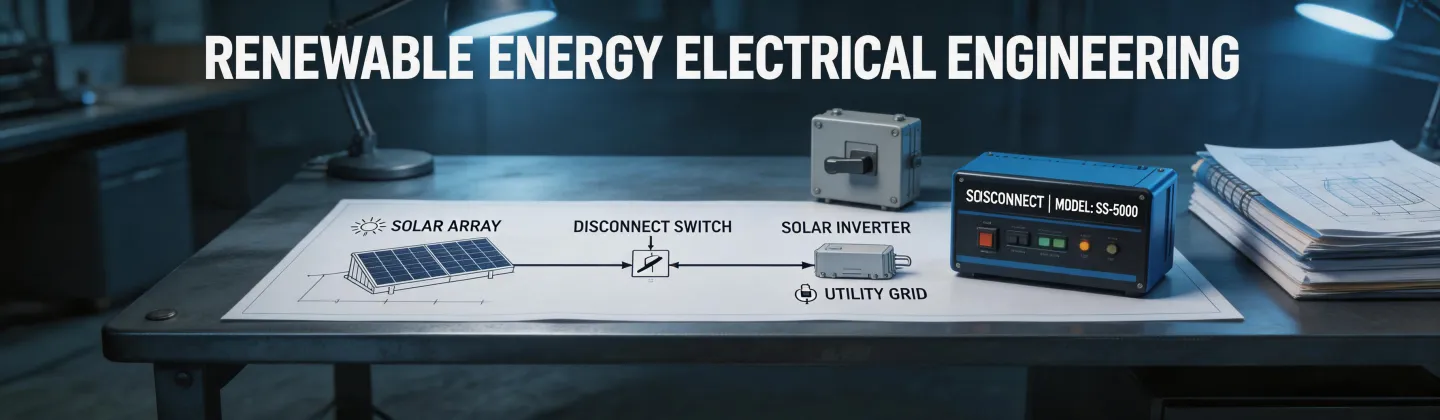
If you're installing an off-grid inverter charger for a remote cabin, workshop, or backup system, budget for a whole-home surge protector from the start. I learned this the hard way after a $2,400 replacement cost that could have been avoided with a $150 device. Here's why this matters for anyone managing B2B equipment purchasing.
When I took over purchasing for our company in 2020, we were consolidating our vendor relationships. We had around 400 employees across three locations, and I was processing 60–80 orders annually for everything from office furniture to electrical infrastructure. One project stands out: equipping a remote satellite office with a solar-plus-battery backup system.
The $2,400 Lesson
Our maintenance manager found what looked like a great deal on an off-grid inverter charger—one of those units that combines solar charge control, battery management, and AC inversion. The price was about 15% below the quote from our usual supplier (ABB, in this case, for their industrial-grade inverters). I approved the purchase.
Eight months later, a summer thunderstorm rolled through. Nothing catastrophic—no direct lightning strike. But a voltage surge from the grid-side transfer switch fried the inverter's control board. The unit was still under warranty, but the warranty explicitly excluded surge damage. The replacement? $2,400 out of our departmental budget.
Here's something vendors won't tell you: that warranty language is standard. 'Acts of God,' 'power surges,' 'improper installation'—they're all coverage exclusions. Even high-end ABB battery systems and their off-grid inverter chargers have this. The difference? ABB's technical support was very clear upfront about recommending a surge protector installation as a prerequisite. The cheaper vendor? They just shipped the unit.
It's tempting to think you can just compare unit prices. But identical specs from different vendors can result in wildly different outcomes when you factor in support, documentation, and upfront honesty about what you need.
Surge Protector Installation: Not Just for Lightning
Most people think surge protectors are only for areas with frequent lightning strikes. That's a simplification. The reality is more nuanced. In a place like Camarillo, California—which has a moderate climate—you might think you're safe. But surges come from many sources:
- Grid switching events (utility company capacitor switching)
- Load shedding from nearby industrial equipment
- Generator startup transients in off-grid or hybrid setups
- Even solar panel string faults can create voltage spikes
What most people don't realize is that off-grid inverter chargers are particularly vulnerable. They're designed to handle steady-state DC and AC power, but their sensitive electronics—MPPT charge controllers, DSP-based inverters, battery management systems—are easily damaged by transient overvoltages. A surge protector on the AC input (and ideally on the DC solar input too) is cheap insurance.
For our Camarillo site, we now use a Type 2 surge protector at the main panel (from ABB's OVR series, which integrates well with their switchgear) and a DC-side protector near the solar array combiner box. Total cost: about $350 installed. That feels like nothing compared to replacing an inverter charger or—worse—a battery bank.
What to Look for in a Surge Protector Installation
If you're managing purchasing for multiple sites or projects, here's what I've learned to verify before signing off on any off-grid inverter charger installation:
First, confirm the surge protector's voltage rating matches your system. A protector rated for 120/240V split-phase won't work on a 48V DC solar input. You need separate protectors for AC and DC circuits. ABB's OVR range clearly labels this. Some budget brands do not. That's a red flag.
Second, check the surge current rating (kA or kA per mode). For a residential or light commercial off-grid setup, you want at least 20 kA per mode at the main panel. At the sub-panel feeding the inverter, 10 kA per mode is usually sufficient. Our Camarillo site uses 40 kA protectors because the building is in a relatively open area. What most people do not realize is that building location matters: a metal-roofed structure in a valley will have different lightning exposure than a wooden structure on a ridge. The installer who gives you a one-size-fits-all recommendation might be cutting corners.
Third, and this is the one that cost me: ensure the surge protector has a visual indicator (green light good, red light replace). Many protectors are sacrificial—they absorb one or two big surges and then need replacement. Without an indicator, you won't know your system is unprotected until it's too late. The ABB OVR units have a clear window. Some competitors have an audible alarm. Either is fine. What's not fine is no indicator at all.
"If you're managing multiple installations, standardize on a surge protector brand and model. It simplifies training for installers and troubleshooting later. We standardized on ABB's OVR series because their documentation is clear and their tech support actually answers the phone."
When a Surge Protector Isn't Enough
I don't want to over-promise. A surge protector will handle most transients, but it won't protect against a direct lightning strike. For that, you need a whole different level of protection: lightning rods, proper grounding, and sometimes isolation transformers. For most off-grid installations in areas like Camarillo, that's overkill. But if your site is on a hilltop or in a region with frequent thunderstorms, factor that in.
Also: not all inverter chargers are equally sensitive. Some high-end units—like ABB's own off-grid inverter charger series (the REACT and PVI series)—have built-in surge protection on the AC input. Others don't. Check the datasheet. Don't assume. Our experience is that industrial-grade brands like ABB and Schneider are more likely to have robust internal protection, but even then, an external protector is cheap redundancy.
Final Thought: The Cost of Certainty
The value of a surge protector isn't the speed of installation or the price of the device. It's the certainty that your $2,000–$5,000 inverter charger won't be fried by a grid glitch. For a B2B buyer managing multiple installations, that certainty is worth the extra $150–$350. The cheapest installation isn't the cheapest if you have to do it twice.
We now include surge protection as a line item in every off-grid solar and battery project. Our procurement specs require it. Our installers provide photos of the installed protector and its green indicator light before we sign off. It's a small process change that has saved us from repeating that $2,400 lesson.
If you're evaluating ABB's battery and inverter line for your next project, talk to their technical sales about surge protection. They'll tell you what they told us: it's not mandatory for the warranty, but they strongly recommend it. That's the kind of advice that separates a vendor from a partner.

Jane Smith
I’m Jane Smith, a senior content writer with over 15 years of experience in the packaging and printing industry. I specialize in writing about the latest trends, technologies, and best practices in packaging design, sustainability, and printing techniques. My goal is to help businesses understand complex printing processes and design solutions that enhance both product packaging and brand visibility.