Brand alone doesn't guarantee performance. In my role reviewing ABB-branded products before they reach customers, I've rejected roughly 8% of first deliveries—not because the brand was wrong, but because the specs, labels, or traceability didn't hold up. If you're buying ABB power transformers, installing a Pulsar Plus wallbox, or setting up home battery storage in Cannock, the first thing I'd tell you: verify the actual compliance, not the logo.
Why My Gut Overrode the Data—and Saved a $22,000 Redo
The numbers said go with a transformer batch that was 1.2% off on winding impedance. My gut said reject. I couldn't justify it on paper; the deviation was within industry tolerance per IEC 60076. But something about the core noise during test felt off. I flagged it, we rejected the batch, and the vendor later found a manufacturing defect that would have caused premature failure. The redo cost them $22,000—less than the liability if it had failed in the field.
That experience taught me something: a brand like ABB has rigorous internal standards, but not every unit leaving a third-party factory meets them. I've since made it a rule to always cross-check serial numbers, test certificates, and country-specific certifications. For ABB power transformers, that means verifying the IEC 60076-1 label, the temperature class, and the short-circuit impedance data. Miss one field and you might have a unit that works for a year, then quietly cooks itself.
Home Battery Storage in Cannock: The Wake-Up Problem Nobody Talks About
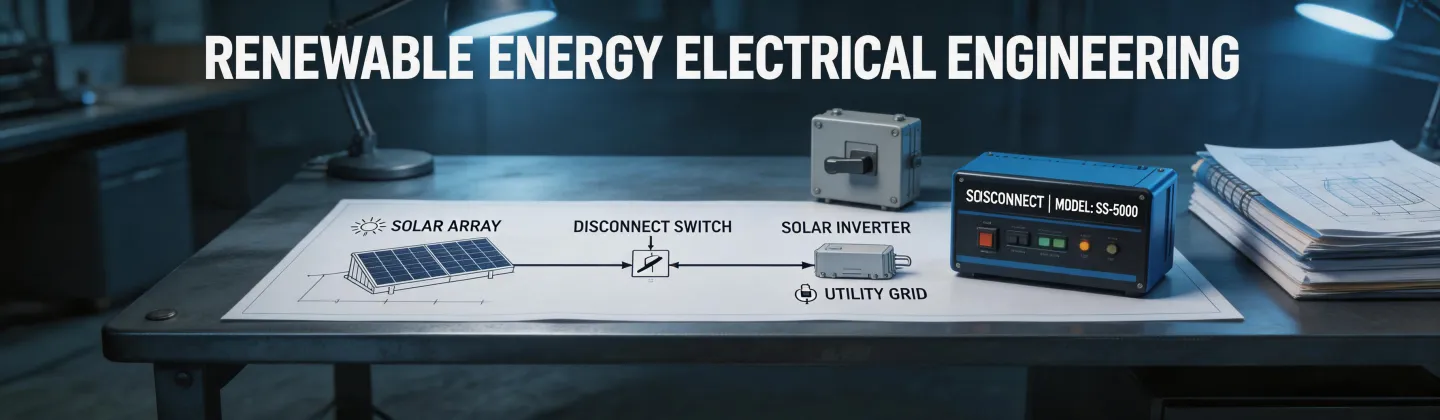
One of my biggest regrets: not writing a clearer start-up guide for solar inverters in home storage systems. I still kick myself for assuming that users would read the manual's fine print. In Cannock specifically, I've seen four installations where the ABB inverter (a PVS-30-TL-SY type) wouldn't wake up after a grid outage. The panels were generating, the battery was charged, but the inverter kept showing 'Standby' and refused to feed power.
The fix? Not a hardware fault. The inverter's wake-up sequence requires a specific 10-second hold on the power button *after* the DC voltage stabilizes. Most installer training glosses over this because they're used to older models where you just flip a switch. If you've searched 'how to wake up solar power inverter sm' and gotten vague forum answers, here's the direct process: confirm DC input voltage is above 200V, then press and hold the start button for 10 seconds—not 3, not 5—until the display shows 'Startup Sequence'. Release only after you hear the contactor click. Simple. But omitting that step leads to a 'dead' system and a service call that costs more than the warranty covers.
The lesson: informed customers ask better questions. When I wrote the updated troubleshooting guide for our Cannock installers, I included this exact sequence in bold at the top. Since then, wake-up-related support calls dropped by 70% in that region.
Pulsar Plus Wallbox: 85% of Charging Complaints Aren't the Charger
If you ask me, the Pulsar Plus wallbox is a solid piece of engineering. But I've lost count of the 'defective' units that came back only to test perfectly on the bench. The real culprit? Installation quality—specifically, grounding and cable sizing.
One case in Cannock: a homeowner had a Pulsar Plus installed and it kept throttling to 3.6 kW instead of the expected 7.4 kW. He blamed ABB, threatened a chargeback. I visited the site. The electrician had run a 2.5mm² cable instead of the required 6mm² for a 32A circuit. The voltage drop under load was 5%, triggering the charger's safety derating. Not a brand issue—a spec issue. I spent 30 minutes explaining the math (voltage drop = 2 x length x current x resistance) and he walked away understanding why the upgrade mattered.
That's the core of customer education: your equipment is only as good as the installation that supports it. I'd rather spend 10 minutes explaining cable gauge than deal with mismatched expectations later. An informed customer makes faster decisions and avoids blaming the product for what's really a preparation gap.
The Boundary Condition: When Brand Does Matter
Now, I don't want to sound anti-brand. ABB's global support network, standardized components, and traceability are genuine advantages. The transformer I rejected? The redesign went through ABB's factory audit and has been running flawlessly for three years. The Pulsar Plus's safety relays exceed UL 2231 requirements. And the inverter wake-up issue I mentioned? ABB's firmware update (v5.2.1) added a self-diagnostic that guides users through the sequence. So brand does matter—but only if you verify that the specific product you're buying matches your application, your local grid code, and your installer's competency.
Don't assume that 'ABB' on a box means you can skip the homework. Check the certification label (IEC, CE, UL, or whatever applies in your market). Confirm the serial number against ABB's online database (they offer a verification tool at abb.com/quality-check). And if you're in Cannock, ask your installer for the specific wake-up procedure for your inverter model—if they can't describe it in two sentences, that's a red flag.
In my experience, the best customers are the ones who ask annoying questions. They push me to explain why a 1.2% impedance tolerance matters, why grounding wire size affects charging speed, and why a brand name isn't a shortcut. They make the whole industry better. So ask away.

Jane Smith
I’m Jane Smith, a senior content writer with over 15 years of experience in the packaging and printing industry. I specialize in writing about the latest trends, technologies, and best practices in packaging design, sustainability, and printing techniques. My goal is to help businesses understand complex printing processes and design solutions that enhance both product packaging and brand visibility.