I'm gonna be blunt: I used to think paying extra for ABB components was a waste of budget. In my first few years handling procurement for a mid-sized solar installer, I chased every possible discount. I'd order generics, look for 'equivalent' models, and pat myself on the back for saving 15-20%. Then I spent three years (and roughly $4,700 in avoidable costs) learning why that approach was garbage. Here's the deal: in renewable energy installations, the price of uncertainty is always higher than the cost of certainty.
My 'Cheaper is Better' Era (2017-2019)
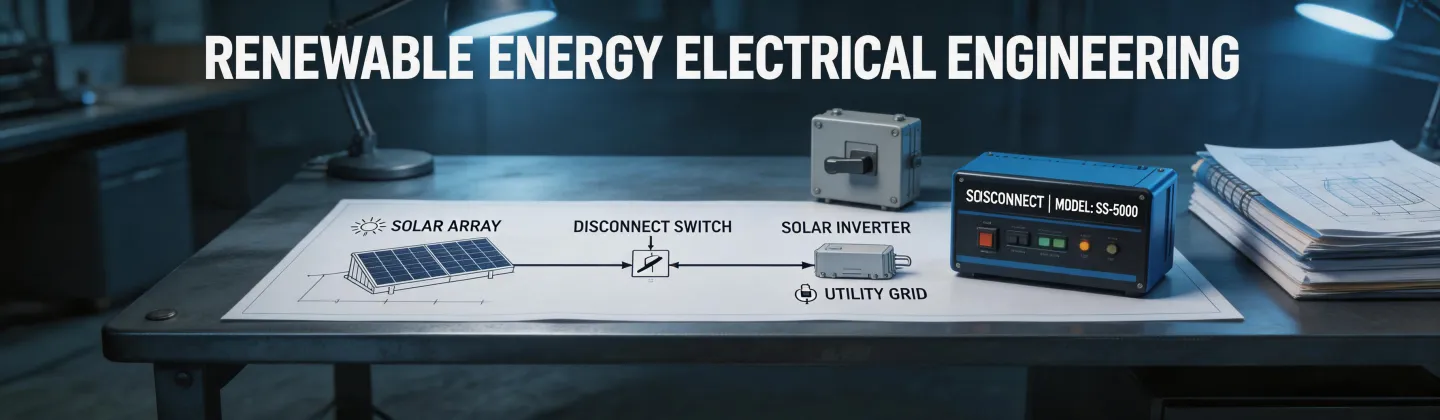
I remember my first major mistake like it was yesterday. It was Q2 of 2017. We had a tight deadline for a commercial solar-plus-storage project, and I ordered a batch of non-ABB disconnect switches to save about $320. The spec sheet looked fine. The vendor had decent reviews. I thought, 'How different can a disconnect switch be?'
The answer: very different. We installed 12 of them. Three failed within the first month. One literally wouldn't disengage under load. The electrician on site called me at 6 PM on a Friday. We spent the entire weekend swapping them out. Total cost of the 'savings': $320 saved on parts, $1,850 in emergency labor, plus a 3-day project delay and a very unhappy client.
That was the moment I learned that a disconnect switch isn't just a switch. It's a safety device that needs to work every single time, for years, in all conditions. ABB's industrial-grade reliability? That's not marketing fluff. It's the difference between a routine maintenance check and an emergency call at 6 PM on a Friday.
The $400 Rush That Saved a $15,000 Event
My perspective shifted even more dramatically in March 2024. We were prepping for a major trade show, part of our display involved a live demo of our EV charging infrastructure. The setup required a specific ABB transformer model—we had it in our warehouse, but the voltage specs were wrong for the venue's power supply.
We needed the correct transformer within 48 hours. Standard shipping was 5-7 days. Our procurement team found a generic equivalent that could ship in 3 days for standard price. But after my 2017 experience, I wasn't taking that chance. I authorized the rush shipping on the exact ABB model from an authorized distributor. Cost: $400 extra. The alternative was arriving at the show with a non-working demo, which would have meant a wasted booth investment of roughly $15,000.
Turns out, the generic equivalent wouldn't have worked anyway—the input/output configuration was slightly different once we double-checked the full specs during the rush order. We caught that because the ABB distributor's support team did a thorough verification before processing the order. You don't get that from a discount supplier.
Three Things I've Learned About 'Worth It'
1. 'Standard Specs' Aren't Standard
This is the trap I fell into the most. Every vendor says their product 'meets industry standards.' But 'meets standards' is the basement, not the ceiling. ABB components, from their wind inverters to their smart meters, are engineered for a higher duty cycle. They're tested for continuous industrial use, not just intermittent operation. I've seen too many 'compliant' components fail in the field because they couldn't handle the real-world thermal load of a 24/7 renewable energy installation.
2. The Support Ecosystem is the Hidden Value
When an ecoflow smart meter integration didn't work as expected on one of our hybrid solar systems, I didn't need to scream at five different support teams. Our ABB contact handled the compatibility check, provided the wiring diagrams, and had us sorted in under 3 hours. Try getting that level of support when you've bought the cheapest option from an unknown supplier.
3. 'Time is Money' Isn't a Cliché
In the solar industry, project delays cascade. A 2-day delay on a transformer delivery means your crew is idle on site. That's not just the cost of the delay—it's the cost of rescheduling the electrician, the crane rental, the utility inspection. I once had a $3,200 order of generic surge protectors get rejected at QA because they didn't have the correct UL listing for outdoor use. The re-ship took two weeks. The project delay cost us more than double the price of the parts. Now I only specify surge protectors from proven lines like the ABB OVR series, and I always confirm the environmental rating upfront.
What About the 'But ABB is More Expensive' Argument?
I get it. Budgets are tight. I've had project managers push back, asking why we can't just use a 'good enough' option from a different brand. And sure, there are components where the price difference is harder to justify—like basic wiring products or non-critical enclosures.
But here's the counter-argument I've started using: are wind turbines recyclable? That question comes up in sustainability reports for our clients. If I'm sourcing components for a wind farm, I want a manufacturer who can answer that across their entire supply chain, not just for one product. ABB publishes sustainability data for their factories and products. A generic supplier selling 'equivalent' inverters probably can't tell you the carbon footprint of their factory, let alone the end-of-life recyclability of their components. That matters for certifications and for your reputation.
The same logic applies to ordering a specific transformer. You pay for the data sheet, the support, the guaranteed UL/CE listing, and the knowledge that if something goes wrong, there's a support line that actually knows the product. You're paying for certainty, not just hardware.
My Rule Now: Risk-Adjusted Cost
I don't just look at the purchase price anymore. I calculate what I call the 'risk-adjusted cost.' That's: [Item Price] + [Probability of Failure × Cost of Failure] + [Cost of Delay × Probability of Delay].
For critical components like transformers and disconnect switches, the probability of failure with a generic is often triple that of a reputable brand like ABB. When a single failure can cost you $2,000 in emergency labor plus a week of reputation damage, suddenly the 20% premium on the ABB part looks like a bargain.
I'm not saying every project needs the top-tier option. But for anything that touches safety, reliability, or a critical deadline? I'll pay for the certainty. I've made that mistake enough times to know better.

Jane Smith
I’m Jane Smith, a senior content writer with over 15 years of experience in the packaging and printing industry. I specialize in writing about the latest trends, technologies, and best practices in packaging design, sustainability, and printing techniques. My goal is to help businesses understand complex printing processes and design solutions that enhance both product packaging and brand visibility.