-
What I compare first
-
Main shaft for wind turbine systems: HAWT vs VAWT
-
Tip speed: How fast do wind turbines spin at the tip
-
Mechanical loads and system complexity
-
Electrical protection: ABB non fusible disconnect switches and current transformers
-
Choosing between vertical-axis and horizontal-axis wind turbines
I'm a quality and compliance manager on the renewable-energy side of ABB. I review technical submittals, certificates and product documentation—roughly 200 items each year. This article is my practical comparison of two wind turbine layouts: vertical-axis wind turbine (VAWT) designs and horizontal-axis wind turbine (HAWT) designs. It's not a marketing brochure; it's the logic I use before saying yes to a specification.
If you've ever compared turbine proposals, you know that both slides tend to claim efficiency and reliability. The real differences are in shafts, loads, tip speed control, electrical protection and the cost of being wrong. Let's walk through the way I compare them.
What I compare first
When I receive a turbine package, I ignore the color of the nacelle and check four things:
- main shaft and drivetrain load path
- tip speed and overspeed control
- electrical protection and instrument transformer specification
- service and replacement costs, not just first price
This order is not random. A turbine with a beautiful power curve but a poorly documented main shaft is a maintenance risk. A turbine with a solid mechanical design but incorrect current transformer specification is an operational risk.
Main shaft for wind turbine systems: HAWT vs VAWT
The main shaft for wind turbine systems is where the structural story starts. In a HAWT, that shaft is mounted up in the nacelle, tilted, and carrying the rotor's full weight. It sees gravitational bending on every revolution. That makes fatigue a leading check item.
In a VAWT, the shaft is vertical and can be much closer to ground level. That sounds like lower maintenance costs, and sometimes it is. But before you assume that, ask about the bearing arrangement and side loads. A vertical shaft still transfers large lateral loads from the rotor. If a vendor cannot show alignment tolerances, predicted bearing life and the exact load cases used, the vertical layout doesn't automatically save money.
The conclusion on this dimension: a top-mounted HAWT shaft tends to be harder to access, while a VAWT shaft is easier to access only if the design places the drivetrain where people can actually work on it. For both, I require documented main shaft fatigue loads and certificates, not just rated torque.
For utility-scale or commercial wind turbines, I use IEC 61400-1 as the baseline for design load cases. If someone mentions a certified turbine but doesn't provide the certificate number, I don't write that off as a small detail. It's the same reason I ask for serial-number-specific test reports on the main shaft.
Tip speed: How fast do wind turbines spin at the tip
The easiest way to answer this is with a formula. Tip speed equals pi times rotor diameter times rpm divided by 60. For an 80-meter rotor at 18 rpm, that works out to about 75 meters per second. At 20 rpm, the same rotor has a tip speed of about 84 meters per second, which is roughly 188 mph.
So how fast do wind turbines spin at the tip? Faster than people usually expect. The rotor looks slow because it is large, but the tips are moving at highway speed. That's why overspeed protection is a safety system, not a software feature.
When comparing HAWT and VAWT, use tip-speed ratio rather than only rpm. Horizontal-axis designs tend to run at higher tip-speed ratios, often in the range of 6 to 8. Vertical-axis turbines may run at lower ratios, which can reduce tip noise but often creates a different torque demand. A lower tip-speed ratio is not inherently better or worse; the important quality check is the overspeed control sequence and the stopping behavior in high wind.
Mechanical loads and system complexity
A HAWT nacelle must face the wind, so it needs a yaw system with drives, gears and brakes. A VAWT accepts wind from more directions without that yaw drive. That's a real simplification, but it is not the whole story.
Many vertical-axis rotor designs experience varying aerodynamic loading as each blade rotates. Multiple blades or pitch strategies can reduce that variation, but the structural controls still have to be verified. The real conclusion is different from what the marketing slide says: no yaw drive saves one set of components, not the mechanical fatigue analysis. I would rather review a VAWT with a complete load report than a HAWT with a vague one.
Electrical protection: ABB non fusible disconnect switches and current transformers
Now move from the rotor to the electrical cabinet. This is where the comparison often falls apart. The cheapest turbine package usually doesn't lack a generator; it lacks the electrical details that make maintenance safe and metering trustworthy.
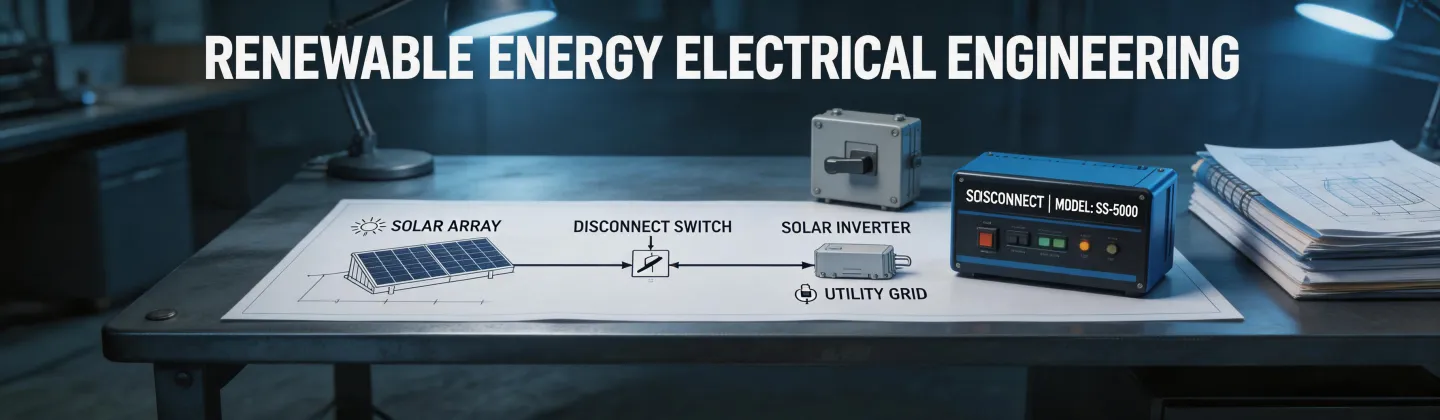
Take disconnects. ABB non fusible disconnect switches are often specified when upstream overcurrent protection already exists. They give maintenance personnel a visible air gap and a lockout point without putting fuses inside the switch. But non fusible does not mean no protection required. The supply side still needs an upstream breaker or fuse sized to clear faults. If a design treats an ABB non fusible disconnect switch as the only protection, that's a quality gap.
I remember a spec that said standard protection for an auxiliary load. The buyer meant overcurrent relay; the supplier heard standard breaker. By the time we compared the one-line diagram to the parts list, it was clear that no visible disconnecting means had been provided for the maintenance crew. We caught it before shipment, but only because someone made the concrete comparison between the specified device and the device that actually arrived.
Current transformers cause similar silent failures. The ABB current transformer catalogue pdf lists rated burdens, accuracy classes and rated secondary currents. I have seen current transformers selected by price without checking whether the connected cable burden exceeded the transformer rating. The meter still runs; the numbers are just inaccurate. That's worse than an obvious failure, because nobody notices until a performance test doesn't match the energy meter.
For current transformer selection, use IEC 61869-2 as the reference standard. Then download the ABB current transformer catalogue pdf and verify burden, accuracy class and related values with the actual wiring distance. The short time spent on this step pays for itself in avoided field problems.
Choosing between vertical-axis and horizontal-axis wind turbines
Which one should you buy? I won't give you a one-word answer, because the best answer depends on site conditions and service capability. But I will give you a decision rule: choose the design whose documentation is complete enough to operate, maintain and reproduce in 15 years.
For open sites with good wind and good crane access, a HAWT from an established manufacturer still has the strongest track record. The blade and gearbox supply chain is mature. For sites where tower-top lifting is difficult or where rotor orientation is restricted, a VAWT package can be attractive. The deciding question is whether the vendor provides the same level of structural documentation, protection coordination and component traceability.
I've also learned to compare total cost, not price. A lower first price becomes expensive when the main shaft certificate doesn't match the serial number, the upstream protection is missing, or the current transformer burden is wrong. Over the last four years, that pattern has repeated enough that I now treat lowest total cost with documented compliance as the objective.
There's something satisfying about catching a mismatch in drawing review instead of in the field. It takes more than experience; it takes a willingness to compare materials on specifics, from main shaft load cases to ABB non fusible disconnect switches to the ABB current transformer catalogue pdf. Rotor orientation is part of the conversation, but it's not the whole story.

Renata Silva
Renata Silva is a photovoltaic module analyst covering monocrystalline solar panels, bifacial modules, TOPCon and heterojunction designs, glass-glass construction, junction boxes, and module warranties. She interprets IEC 61215 and IEC 61730 evidence while comparing rated power, conversion efficiency, temperature coefficient, bifaciality, insulation, mechanical-load results, degradation assumptions, and tolerance. Her technical guides help EPC engineers, distributors, and project buyers separate qualification evidence from site-specific energy yield, climate exposure, installation constraints, and long-term performance risk.