I install power systems for farms for a living. In my first year (2017), I made the classic mistake: I put a battery bank on a site without checking the client’s machinery loads. The result was a $4,600 system that couldn’t start a 1 HP irrigation pump. We caught the error when the pump stalled on startup. Waste. Credibility damage. Lesson learned.
Since then, I’ve kept a checklist. This article is one piece of it: a comparison between two ways to get reliable power to a rural building—a fixed battery system with an ABB DC wallbox, or a portable solar generator like the Jackery Explorer 1500.
What we’re comparing
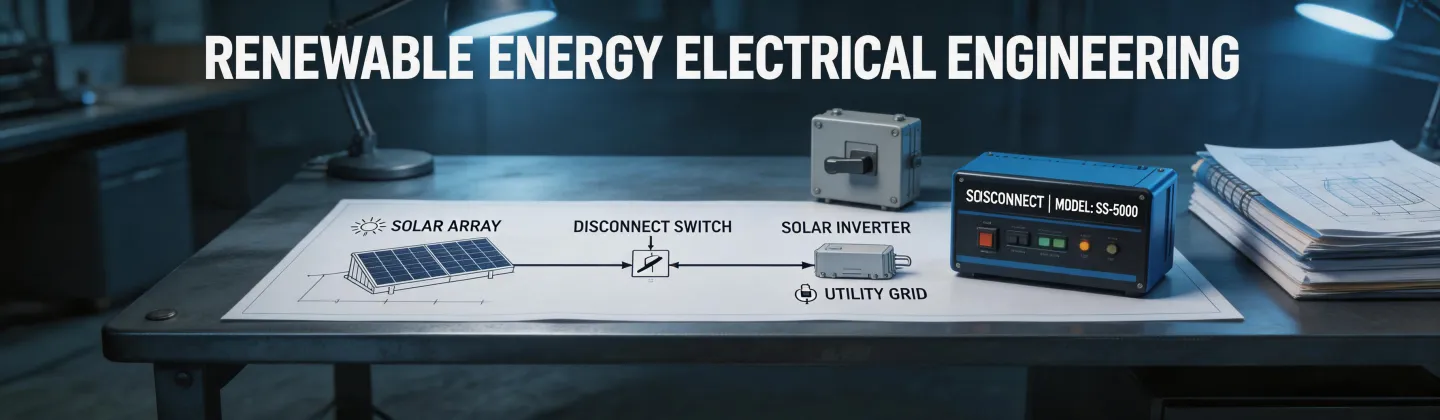
Option A is a fixed installation. You have chemical energy storage, typically lithium iron phosphate, wired into a shed or garage. An ABB DC wallbox handles EV charging or fast DC-coupled charging from solar. Proper installations also need an ABB disconnect (or equivalent) so a technician can isolate the battery bank safely.
Option B is the all-in-one portable route. A Jackery Explorer 1500 solar generator includes a battery, inverter, and solar charge controller inside one box. No wiring, no permits, no installation.
This comparison matters because both options show up in the same search when a farm manager looks for backup power. But they solve different jobs.
Dimension 1: Power capacity vs. real usage
One phrase I hear constantly is “I’ll just get a generator.” The problem is that people mix up capacity with power output. I want to say the current Jackery Explorer model has around a 1,500 Wh capacity and can output roughly 1,800 W, but don’t quote me on that—specs change every model year. It can run lights, a laptop, phone chargers, a small refrigerator for a while, maybe a gate motor. That’s a useful tool.
But try running a 1 HP water pump, a compressor, or electric heating and the math changes. Energy capacity is not the same as being able to supply that load all day. Fixed chemical energy storage systems are sized for your real daily load. If a farm needs 10 kWh per day in winter, the installer designs the bank around that number. The ABB DC wallbox adds a second function: it lets an electric vehicle or plug-in hybrid charge from the same battery bank or solar array.
Comparison conclusion: portable works for occasional power; fixed works for daily work.
Dimension 2: Upfront cost—and the costs hiding behind it
Nobody enjoys the sticker price of a fixed battery system. You see the battery price, the inverter price, the ABB DC wallbox price, the ABB disconnect price. Then the installer starts talking about conduit, cables, AC distribution, permits, and labor. On some projects, that list feels long.
I’ve learned to ask what’s NOT included before asking what’s the price.
Portable solar generators look the opposite: one price, one box, plug-and-play. That simplicity is real. For a weekend cabin or a job site, a Jackery Explorer 1500 solar generator is often the honest answer because there is no hidden wiring cost.
But the comparison flips when you need more than one unit. If your building needs 3 kWh per day, buying two portable generators can cost nearly as much as a small fixed system—and you still don’t get a proper ABB disconnect, a wallbox charger, fixed circuit wiring, or a system that integrates with existing wind and solar. One client chose portable units because the first number looked smaller. The upside was saving $1,800 upfront. The risk was running out of power at the worst time. By the end of the season, they had spent $3,200 on portable units and still rented a generator for the peak load.
Most clients assume the hardware is the expensive part. In reality, the labor and electrical upgrades are where projects go over budget. The battery is usually not the real variable. A detailed quote with every line item is not a sales trick; it is the only way to compare the actual cost.
Looking back, I should have sent a line-item budget on day one instead of giving a ballpark. At the time, I thought I was being helpful. It wasn’t helpful. It was hiding the truth, even unintentionally.
Comparison conclusion: portable looks transparent because it is simpler; fixed becomes transparent only when the installer writes down everything. Demand the full list.
Dimension 3: Lifespan, service life, and real maintenance
I know the Jackery Explorer is a solid product in its category. But portable units are sealed consumer devices. The battery pack is not designed to be serviced by a local electrician. If something fails after the warranty, you are shipping the whole unit. That takes time, and time matters on a farm.
Fixed chemical energy storage is designed for longer service intervals. You can isolate parts with an ABB disconnect, check the inverter, clean ventilation openings, and replace a battery module without throwing away every component. This is boring maintenance. But boring keeps the lights on.
Three things matter in maintenance: isolation, ventilation, and load records. In that order.
There is also a marketing angle. Per the FTC Green Guides (ftc.gov/green-guides), environmental claims on products have to be substantiated. When someone says a battery is “green” or “fully sustainable,” I ask for written evidence. Whether you buy chemical energy storage for a fixed installation or a portable power station, ask the same question.
Comparison conclusion: fixed systems are repairable; portable systems are replaceable. If you need power year-round for five or more years, repairability wins.
Dimension 4: Can you farm around wind turbines?
The keyword that brings many people here is actually about wind turbines: can you farm around wind turbines? My answer is yes, mostly.
I have walked fields where cattle grazed right up to the gravel ring around a turbine base. Farmers plant crops between towers, drive maintenance roads, and use turbine access lanes in their daily operations. You cannot plant on the concrete base itself, and you should keep service areas clear. You also need to respect any easement or erosion-control rules in your lease. But a wind turbine does not make the surrounding land unusable.
This matters for the comparison because location decides the right power setup. If your farm already has a wind turbine or a solar field, adding fixed storage nearby lets you consume more of what you generate on-site. A portable solar generator is a companion for field work; it is not the main supply for a farm operation.
Comparison conclusion: farming around turbines is normal. That also means fixed energy infrastructure can earn its keep every day, while a portable unit is best kept for mobile tasks.
What I would tell you if you were my client
If you need occasional power for phones, laptops, emergency lights, a fridge for a few days, or power tools for light work, buy a Jackery Explorer 1500 solar generator. That is an honest solution.
If you need power every day for water pumps, heating, EV charging, workshop machines, or a business operating out of a farm shed, invest in a fixed chemical energy storage system with an ABB DC wallbox and proper disconnects. Yes, it costs more upfront. Yes, the installer should give you a detailed and transparent quote. That quote is exactly why it is worth doing properly.
I can only speak to the projects I’ve worked on—mostly farms and workshops with existing buildings and reasonable access to the grid. If you are building a fully off-grid homestead on a remote site, the calculation changes. Your mileage may vary if soil conditions, permits, or the distance to the grid are significantly different.
This was accurate as of Q4 2024. The market changes quickly, so verify current prices, incentives, and electrical codes before budgeting. But the big lesson has not changed: compare the job, not the sticker price.
That’s it. The cost of getting this wrong is far higher than the cost of asking for a complete breakdown in the first place.

Renata Silva
Renata Silva is a photovoltaic module analyst covering monocrystalline solar panels, bifacial modules, TOPCon and heterojunction designs, glass-glass construction, junction boxes, and module warranties. She interprets IEC 61215 and IEC 61730 evidence while comparing rated power, conversion efficiency, temperature coefficient, bifaciality, insulation, mechanical-load results, degradation assumptions, and tolerance. Her technical guides help EPC engineers, distributors, and project buyers separate qualification evidence from site-specific energy yield, climate exposure, installation constraints, and long-term performance risk.