I'm not an electrical engineer. I'm the office administrator who ended up managing energy-related purchasing for a 60-person company, and if you're looking for a neutral product roundup, this isn't that. I'm writing because the buying process taught me that efficiency is a competitive advantage, not a back-office detail.
When I took over purchasing in 2021, I inherited about $120,000 in annual vendor spend across eight suppliers. One supplier couldn't provide proper invoicing, and it cost us $2,400 in a rejected expense report. So when leadership asked me to look into EV charging and rooftop solar, I had a bias: fewer vendors, cleaner paperwork, faster implementation. The cheapest bid is rarely the cheapest once you count the admin hours and schedule risk.
First, what is a power inverter for?
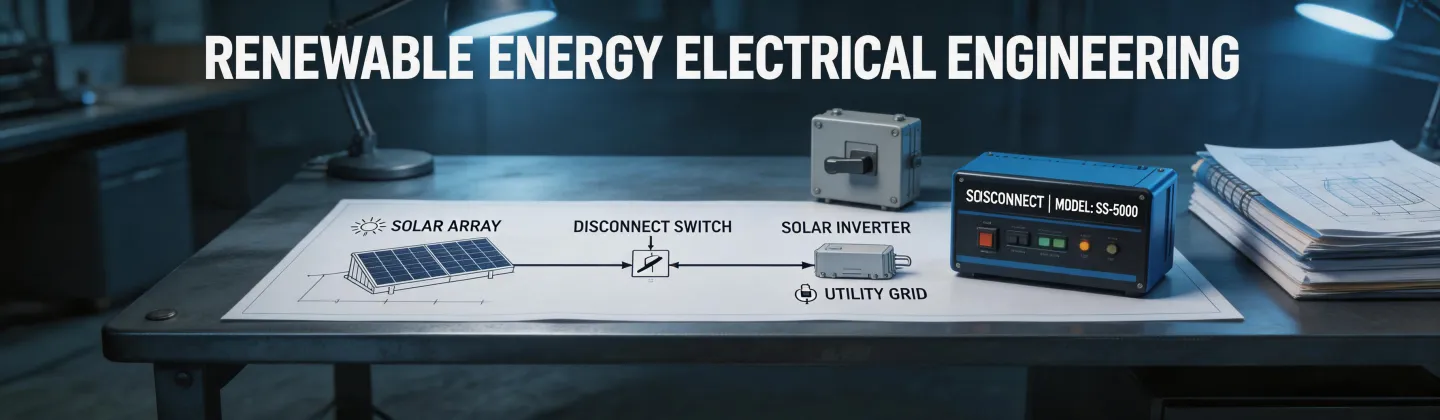
If you're landing here from a search, let's get the basic definition out of the way. A power inverter takes DC electricity from solar panels or batteries and converts it to AC electricity that your building and appliances can use. Your computers, lights, and HVAC run on AC. Without an inverter, your solar panels are just expensive roof tiles. Basically, the inverter also manages grid synchronization, voltage control, and monitoring.
That's why the choice of a 4kw solar inverter mattered so much. We needed enough capacity for a small office roof, but not so much that we'd waste money on idle capacity.
Why our 4kw solar inverter decision came down to paperwork
I know paperwork sounds boring. But for a buyer, a 4kw solar inverter is not just a power electronics box. It's a set of claims about safety, performance, and interoperability. The ABB inverter spec sheet we evaluated was public, searchable, and matched the model number on the quote. That made my life easier.
Before I got too deep into quotes, I remembered the FTC Green Guides (ftc.gov) say environmental and performance claims need to be substantiated. I used that as a buyer's rule: if a vendor couldn't show me testing documentation, I moved on. ABB did not have that problem. The inverter also referenced UL 1741 and IEEE 1547, which are the standards our utility inspector wanted to see.
Our 4kw solar inverter is one of ABB's string inverters, connected to three panel strings on our roof. It was undersized for the full roof, but we weren't trying to run the whole building off solar; we were trying to shave the afternoon peak. That's where the next document became important.
The solar panel combiner box diagram that saved us
The most useful drawing in the whole project was not the inverter spec sheet. It was the solar panel combiner box diagram. When multiple strings of panels run down to one point, the combiner box brings those positive and negative conductors together, with fuses and a disconnect, before the cable continues to the inverter.
A good solar panel combiner box diagram shows which fuse feeds which string, how the busbar is arranged, and the exact path to the inverter. We paid the installer an extra $150 to draw one that matched our array instead of using the generic factory schematic. That diagram saved us later: a string fault was traced to a grounding issue in string 3 because the diagram was clear enough for the service tech to isolate it before opening anything.
So if you're asking why anyone cares about a solar panel combiner box diagram, it's not academic. It's the difference between a 30-minute diagnosis and a half-day guessing game.
ABB EV charging and the ABB wallbox: what actually happened
Once solar was on the table, EV charging came up naturally. ABB EV charging covers a lot of ground, from AC wallboxes to DC fast chargers. For a 60-person office where employees park for six to eight hours, AC charging was enough. We installed two ABB Terra AC Wallbox units in the parking lot.
I chose the ABB wallbox for a reason that probably won't appear in a product review: the documentation matched the hardware. The quick-start guide, the label on the back, the online registration page, and the invoice all used the same model naming convention. That sounds minor, but I've dealt with aftermarket chargers where the manual referenced features the unit didn't have. During a permit inspection, that consistency is worth real money.
We also avoided a major electrical upgrade because the two ABB wallbox units can share a load management signal. They communicate with each other and stagger charging instead of both pulling full current at the same time. That saved us at least $3,000 in panel upgrades, and it made the installing electrician's life easier.
Where my assumptions almost backfired
I nearly skipped testing the ABB wallbox app across different phones. I use an iPhone. Our maintenance manager uses Android. The first time he tried to adjust the schedule, the app didn't show the same unit permissions, and we lost a week sorting it out with support. The hardware was fine; my everyone-uses-iPhone assumption was the problem.
That is not a product complaint. It's a process gap. We didn't have a formal approval or testing checklist for smart building purchases, so I spent three separate calls explaining why a second quote was justified. Finally I created a one-page comparison sheet. It took me an hour. I should have done it after the first time.
When this setup might not be right
Let me be honest about the limits of this story. Our building has a flat load profile, a south-facing roof, and no significant shading until late afternoon. If you're in a manufacturing facility with welders or a 24/7 data center, a 4kw solar inverter is going to be too small, and two ABB wallbox units may not be enough for your fleet.
I can also only speak to my sample. I'm not a procurement director for a utility. I've managed maybe a few dozen related orders, not hundreds. If you're doing multi-site charging installations or utility-scale solar, you need engineers, not an administrator's checklist.
To be fair, ABB is not the only legitimate option. Siemens and Schneider Electric make good equipment too, and if your existing electrical contractor is trained on one of those brands, you should probably stay there. The inverter is only as good as the installer who wires it.
Bottom line
I'm not 100% sure ABB is the right call for every building. Nobody can be, and any vendor who says otherwise is overselling. But I am confident about the bigger point: efficiency is a competitiveness issue. The smoothness of the purchase, the clarity of the documentation, and the speed of the installation are part of the product, not just support functions.
That efficiency is why we ended up with an ABB wallbox and a 4kw solar inverter instead of a cheaper alternative. The equipment has performed well, but what I'm recommending is the process around it. If a vendor's buying process feels inefficient before you sign, the project after the order won't magically become efficient. Buy the equipment that also makes your workflow better.

Renata Silva
Renata Silva is a photovoltaic module analyst covering monocrystalline solar panels, bifacial modules, TOPCon and heterojunction designs, glass-glass construction, junction boxes, and module warranties. She interprets IEC 61215 and IEC 61730 evidence while comparing rated power, conversion efficiency, temperature coefficient, bifaciality, insulation, mechanical-load results, degradation assumptions, and tolerance. Her technical guides help EPC engineers, distributors, and project buyers separate qualification evidence from site-specific energy yield, climate exposure, installation constraints, and long-term performance risk.