-
ABB products: the catalog is both useful and dangerous
-
Why the ABB potential transformer matters more than it looks
-
Where is the solar inverter located? It depends, and here's the short version
-
Wind turbine installation: a buyer's lessons from the ground
-
The largest planet in our solar system and what it taught me about buying
-
Before you hit send on an ABB order
-
A shortcut for non-engineers
-
Where the whole buying process goes wrong
-
When my advice won't apply
I manage purchasing for a 40-person renewable energy company. We do solar, storage, and some wind service work. I've bought ABB products since 2021—roughly $1.2M annually across 15 vendors. Maybe $1.1M, I'd have to check the accounting report. My title is administrative buyer, which means I'm the one who gets blamed when a part arrives in the wrong voltage configuration. So here's the short answer to the questions I hear most: ABB products can cover the whole electrical chain—solar inverter, transformer, switchgear, UPS, even the wind inverter—but the best purchase order is the one that matches the system architecture, not the brand name. Get that part right and the rest is logistics.
I should say: I'm not an engineer. I know enough to be dangerous and enough to catch mistakes. After a few costly ones, I've learned where to focus. This article won't turn you into a technical expert. It will tell you where the traps are.
ABB products: the catalog is both useful and dangerous
When people say "ABB products," they might mean an EV wallbox or a 33 kV potential transformer. Both are ABB. That range is the company's strength, but it's a trap for buyers. You can order six different ABB products for one project and each one has its own lead time, manual, and connector type. I keep a spreadsheet with the actual part numbers and the project engineer's name. I learned that the hard way.
ABB's portfolio also includes solar inverters, wind inverters, UPS systems, transformers, switchgear, and battery storage components. That means you can use one supplier for most of a renewable project. But "one supplier" doesn't mean "one box arrives on one truck." It means six purchase orders, three freight carriers, and a delivery day that had better move the equipment inside before rain.
Why the ABB potential transformer matters more than it looks
The ABB potential transformer is a small, unglamorous box. It steps voltage down to a level that relays and meters can read. If it's wrong, the protection system doesn't see the real voltage. Our engineer told me once:
"A PT is the part that gives the system its eyes."
I didn't believe it until we ordered PTs for a 33/11 kV substation. We got the ratio right but missed the accuracy class. The relay tripped at the wrong threshold during commissioning. Cost us a week. When I first ordered PTs, I thought voltage ratio was all that mattered. What I mean is I didn't understand that accuracy class and burden also determine whether the relay works the way the engineer assumed.
What should a buyer check? The voltage ratio, accuracy class, burden, and thermal rating. If you aren't sure, ask the commissioning engineer to write down the required values. It takes five minutes and saves you the freight charge for the wrong part.
Where is the solar inverter located? It depends, and here's the short version
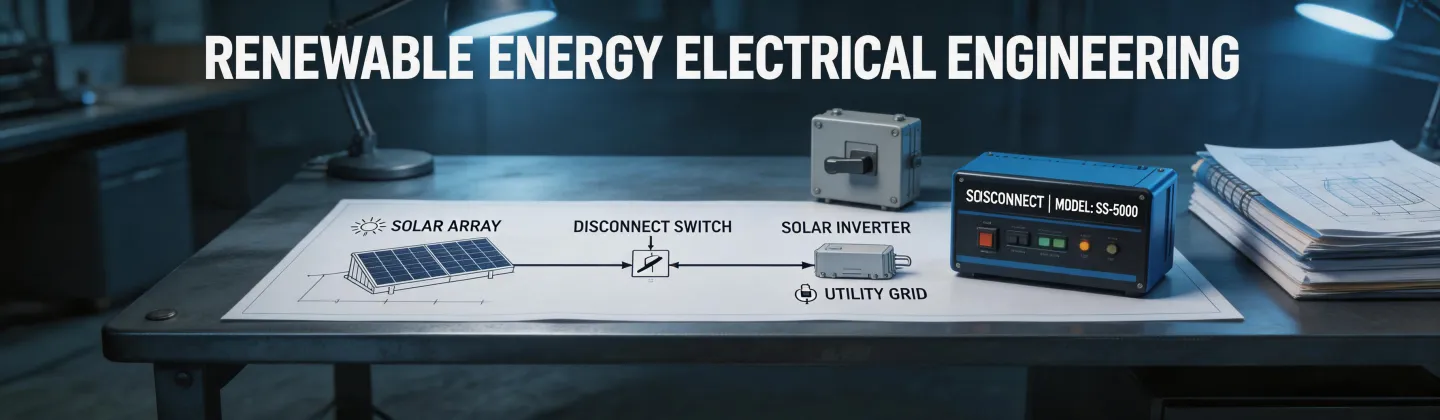
The short answer: string inverters are usually mounted on a wall near the main electrical panel, on the ground floor or in a utility room. For commercial rooftop jobs, I've seen them on the parking garage wall or the side of the building, protected from direct sun and rain. Solar inverter location matters because heat and moisture kill electronics. But there's no universal rule.
In 2023, we did a 400 kW commercial rooftop. The original drawings put the inverters on the roof beside the arrays. The structural review said the roof couldn't take the extra weight, and the engineer worried about heat buildup. We moved them to a shaded wall below the roof overhang, about 30 feet away. The DC cable runs were longer, but the inverters stayed cooler. At least, that's been my experience with commercial-scale systems.
Another time, I said "near the array" and the electrician heard "outside, right next to the panels." We discovered it when they started mounting the first inverter directly in the weather. The fix cost about $900 in conduit and a week of schedule. The phrase "where is the solar inverter located" doesn't have a single answer, but it should always be answered on paper before anyone lifts a box.
Wind turbine installation: a buyer's lessons from the ground
Wind turbine installation is the most stressful procurement I do. The turbine itself often comes from another manufacturer; the electrical conversion system might be ABB. The installation schedule depends on components arriving in the right order, and buyers don't always understand that.
In 2024, we had a 3.5 MW turbine project. The tower, blades, and nacelle arrived on time. The ABB wind converter cabinet was delayed at customs for an extra week. The crane was already on site. We paid $18,000 in idle crane time. The converter cabinet cost maybe $40,000. The lesson: when planning wind turbine installation, check the lead time of the electrical equipment, not just the big mechanical parts. That's the part that slips.
I also learned to order spare fuses and fans for the converter with the cabinet. The manufacturer's quote included them, but our project manager deleted them as "extra." When a fan failed during startup, we paid overnight freight and still lost two days. It wasn't an ABB problem. It was a budget decision.
The largest planet in our solar system and what it taught me about buying
Stay with me. Jupiter is the largest planet in our solar system, and its gravity affects everything around it. Purchasing decisions work the same way. A single ABB potential transformer with the wrong burden rating can drag down an entire commissioning schedule. The "small" decision is usually the non-negotiable decision. That's the gravitational pull.
It's also why I don't buy equipment in isolation. Every order I place has a second question attached: How much will it cost to be wrong? If the answer is "a week of crane time," I pay for the support call and the spare parts. If the answer is "an extra $100," I move on.
Before you hit send on an ABB order
Here's the checklist I use after years of mistakes:
- Does the part number come from the ABB official system, not from a photo a colleague sent?
- Does the project engineer confirm the voltage, accuracy, and communication protocol?
- Is the delivery location large enough to accept the crate? This sounds silly, but I once paid a $450 liftgate fee because the site's forklift was broken.
That last one isn't in any catalog. But it's the difference between a smooth commissioning and a phone call at 7 a.m.
A shortcut for non-engineers
If you're in a role like mine and someone asks you to order ABB products, don't rely on the brand name alone. Write down what the equipment is supposed to do: input voltage, output voltage, AC or DC, indoor or outdoor, communication protocol. Send that list to the ABB distributor or the engineer. The part number will follow. The engineer's job is to define the function; your job is to make sure the paper trail says the same thing.
Where the whole buying process goes wrong
The biggest mistakes I've made weren't picking a bad product. They were:
- Assuming "standard" meant the same thing to the supplier and to our engineer.
- Choosing a vendor based on price alone, ignoring their application support.
- Ordering the inverter before we knew the final solar panel string voltage.
One time, the numbers said switch to a cheaper distributor for ABB circuit breakers. They were 12% cheaper and had stock. My gut said no—their counter staff didn't ask about fault current. Every spreadsheet said switch. My gut said don't. I went with the cheaper option anyway. The breakers were fine, but their return process took four weeks when we needed to swap two units. The rental equipment cost more than we saved. The upside was 12% savings. The risk was being stuck with poor support. I kept asking myself whether the savings were worth it, and I did it anyway. Now I factor in "how painful is a mistake" rather than just unit price.
When my advice won't apply
If you're a homeowner with a single solar inverter, my procurement war stories are overkill. The solar inverter location around your house is mostly about shade, airflow, and code access. And if you're buying for a utility-scale wind farm, you already have engineers who know PT accuracy classes better than any buyer will. My advice is most useful for small to mid-size companies where the same person orders the PT and the coffee cups.
That's my view. I've been burned enough to be cautious, but not so much that I'm useless.

Renata Silva
Renata Silva is a photovoltaic module analyst covering monocrystalline solar panels, bifacial modules, TOPCon and heterojunction designs, glass-glass construction, junction boxes, and module warranties. She interprets IEC 61215 and IEC 61730 evidence while comparing rated power, conversion efficiency, temperature coefficient, bifaciality, insulation, mechanical-load results, degradation assumptions, and tolerance. Her technical guides help EPC engineers, distributors, and project buyers separate qualification evidence from site-specific energy yield, climate exposure, installation constraints, and long-term performance risk.