-
What the building manager actually needs to know about ABB dry-type transformers
-
ABB busbar systems: not just 'fancy extension cords'
-
Can I use a cartoon wind turbine for real energy generation?
-
Solar panel circuit breaker: the unsung hero of installation safety
-
How do I reset the tire pressure monitoring system?
-
One 'dumb question' you should ask: does the ABB product integrate with my existing switchgear?
-
Final practical note: check your shipping address for busbar
What the building manager actually needs to know about ABB dry-type transformers
Look, I'm not an electrical engineer. I'm an office administrator who, back in 2021, was told we needed a new transformer for a building expansion. The project manager handed me a spec sheet and said, 'Get me one of these.' I had no idea what I was looking at. That project taught me more about specifying equipment than any training ever did.
Here's the thing: ABB dry-type transformers are a specific product category. If you're asked to procure one, the key spec points are voltage rating, kVA rating, and enclosure type. The part number often tells you most of what you need—something like ABB DTR-500-480/277 means a 500 kVA dry-type transformer with 480V primary and 277V secondary. (I learned that the hard way after ordering the wrong one and eating a restocking fee.)
ABB busbar systems: not just 'fancy extension cords'
A colleague once described busbars as 'fancy extension cords for industrial power.' I chuckled, but honestly? That's not far off, functionally. But the difference is in the engineering, the ratings, and the installation requirements.
When I sourced ABB busbar for a data center fit-out in 2022, the biggest headache wasn't the product itself—it was getting the exact lengths and tap-off points right. ABB's SIVACON S8 busbar trunking system is modular, but you still need to submit a layout drawing for approval. We had to re-order a 3-meter section because I assumed (wrongly) that 'standard lengths' would cover our layout. The vendor was patient, but the 4-week lead time wasn't:
"The re-order also triggered a new shipping fee—$180 for a 3m section, which I had to absorb into the facilities budget. That was a 'check twice, order once' moment."
Can I use a cartoon wind turbine for real energy generation?
This is one of those questions that actually comes up more than you'd think, especially from marketing folks who want a 'wind turbine sculpture' on the company campus. The cartoon wind turbine—the classic three-blade design you see in icons—is a real design. Small-scale wind turbines for commercial buildings do exist.
But here's the reality check: ABB's wind inverter solutions are designed for utility-scale or large commercial turbines, not for a 5kW decorative unit on a parking lot light pole. If you're serious about on-site wind generation, you need to talk to ABB's renewable energy division, not the building products team. The inverters for small turbines are a completely different product line. (I made this mistake: asked the ABB solar inverter rep about a wind project. They politely redirected me.)
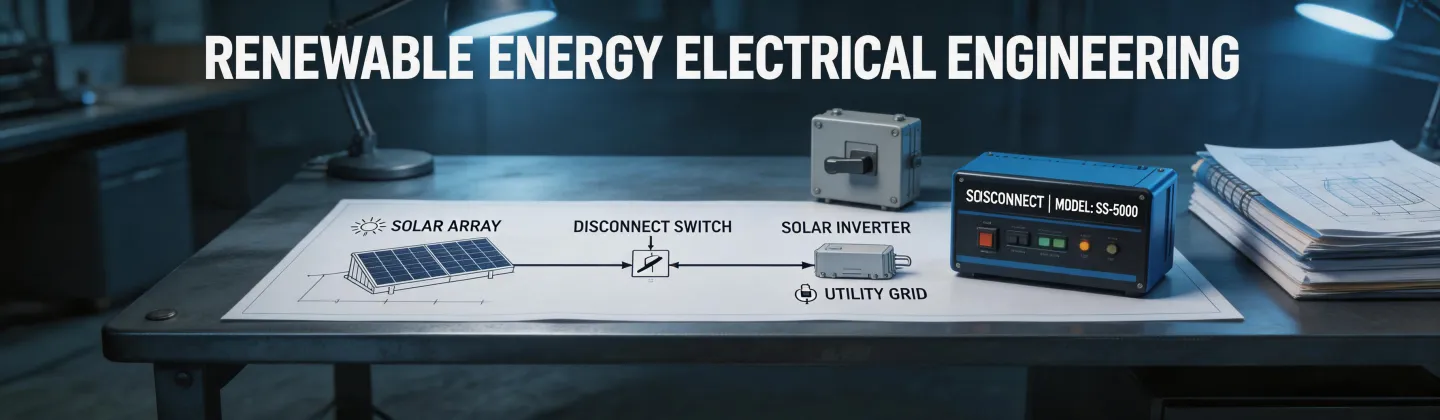
Solar panel circuit breaker: the unsung hero of installation safety
I didn't fully understand the importance of a solar panel circuit breaker until a near-miss incident in 2023. A contractor was installing a rooftop PV system and skipped the breaker on the DC side. I wasn't on the roof, but the project manager told me later that a mis-wired string could have caused an arc flash.
ABB's S800 series DC circuit breakers are the standard for solar installations. The specific model matters: you need a breaker rated for DC voltage (typically 600V or 1000V for commercial panels) and the correct interrupting capacity. A standard AC breaker won't cut it. I now check that the spec sheet includes IEC 60947-2 certification for DC applications. It's a small detail that can prevent a very bad day:
"The $45 dollar breaker I almost cheaped out on would have cost us an estimated $12,000 in potential damage and downtime. That calculation made the premium price feel like a bargain."
How do I reset the tire pressure monitoring system?
This question seems completely unrelated to ABB's power products, but I'm including it because it's a good example of how specific, niche questions show up in procurement contexts. If you manage a fleet of service vehicles, you might be asked about TPMS resets after installing new tires. The answer depends on the vehicle make and model.
For most modern vehicles, the reset button is under the steering wheel or in the glove box. You inflate all tires to the recommended pressure, turn the ignition to 'on' (engine off), and press and hold the TPMS reset button until the light blinks three times and goes off. Some vehicles don't have a button—they reset automatically after driving at ~50 mph for 10 minutes. The manual is your friend. (And ABB doesn't make TPMS sensors, but if you're managing a facility with company vehicles, that knowledge is still useful.)
One 'dumb question' you should ask: does the ABB product integrate with my existing switchgear?
This is the question I wish I'd asked in 2021. When you order an ABB dry-type transformer, you assume it works with whatever switchgear you already have. Not always. ABB's product lines—VD4 vacuum circuit breakers, Emax2 air circuit breakers, SACE Tmax XT molded-case breakers—each have different communication protocols and physical interfaces.
I learned this the expensive way: the transformer we ordered had a specific busbar connection flange that didn't match our existing Siemens switchgear. The solution was an adapter kit, which cost $400 and added two weeks to the schedule. Had I asked the ABB distributor upfront about integration requirements, we'd have avoided the delay:
"A 10-minute phone call could have prevented a $400 headache and a scheduling nightmare. Now, I always ask: 'What accessories do I need to make this compatible with what's already installed?'"
Final practical note: check your shipping address for busbar
This sounds silly, but ABB busbar trunking systems ship in long, rigid sections—typically 1m, 2m, or 3m lengths. Standard freight trucks handle them fine, but if your loading dock has a tight corner or a low ceiling clearance, you might have trouble. We once had a delivery that couldn't be offloaded because the truck's liftgate was too low for our dock. The driver had to wait 45 minutes while we found a forklift. The delay cost us $150 in demurrage fees.
Before ordering busbar, verify: (a) your dock can receive the longest section, (b) the hallway to the installation point has enough clearance, and (c) you have a plan for vertical lifts if needed. It's another 'check twice' moment that saves a lot of hassle.

Renata Silva
Renata Silva is a photovoltaic module analyst covering monocrystalline solar panels, bifacial modules, TOPCon and heterojunction designs, glass-glass construction, junction boxes, and module warranties. She interprets IEC 61215 and IEC 61730 evidence while comparing rated power, conversion efficiency, temperature coefficient, bifaciality, insulation, mechanical-load results, degradation assumptions, and tolerance. Her technical guides help EPC engineers, distributors, and project buyers separate qualification evidence from site-specific energy yield, climate exposure, installation constraints, and long-term performance risk.