I'll be honest with you: until about 18 months ago, I was a sucker for the phrase "one-stop shop." When you're managing procurement for a mid-sized company transitioning to renewable energy, the promise of a single vendor who can handle everything—solar inverters, wind turbine components, battery storage, even the busbar and switchgear—sounds like a dream. Cut down on vendor management, streamline invoicing, and if something goes wrong, you only have one throat to choke. Right?
Yeah, I thought so too. That was before the spain energy storage news from last spring convinced our ops director we needed to add a 500 kWh battery system to our existing solar array. And before I learned that the neat, tidy timeline of the solar system (4.6 billion years, give or take) was far simpler to map than the actual timeline of a multi-vendor energy project.
The Setup: A Clean Energy Overhaul—The Smart Way
Let me set the scene. It's April 2024. I'm sitting in a conference room with our facilities manager, the CFO, and a consultant from a firm that specializes in industrial energy systems. We're looking at our site's energy profile. We've already got a 200 kW rooftop PV system powered by ABB solar inverter units—those have been rock solid for two years. But we want to add a wind turbine (a small 50 kW vertical axis unit) to capture the consistent breeze off the nearby river, and we need storage to time-shift our solar generation for the evening shift.
Goal: One integrated system, managed by one software platform, with one supplier for the new gear. My mandate: Make it happen without blowing the budget or ending up with a franken-system. In total, we were looking at about $180k in new equipment.
The consultant warns me: "Don't go for the guy who claims he can do it all. Find a specialist for the solar side, a specialist for the wind side, and a specialist for the storage and power conversion. The integration middleman is where you save money." But the CFO whispered a different song: "I want one PO, one invoice, one warranty. Find me a one-stop shop."
I should have listened to the consultant. Instead, I listened to the guy holding the budget.
The Turning Point: When a "Full Solution" Means Nothing
I found a vendor—let's call them "GreenGiant Integrators." Their website boasted: "Solar, Wind, Storage, Switchgear—We do it all." Their abb catalog listing was spotty, but they claimed they could source everything under one roof. They offered a 15% discount on the whole package if we bundled. The CFO was thrilled. I was skeptical, but I signed the PO.
Here's where it fell apart. The first problem was the timeline. They promised a 12-week lead time. Week 14 comes and goes. No delivery. I call. "Oh, the ABB busbar system for the battery interconnect is on backorder. The manufacturer says 4 more weeks." So much for one-stop shopping—they didn't even have their own sourcing leverage.
The second problem was the expertise gap. Their electrician wasn't licensed for the specific high-voltage DC busbar we needed. He tried to use a portable power station style connector as a temporary workaround. I had to stop the installation on the spot. To fix it, we had to hire a specialized ABB-certified technician from a third-party firm. That cost us an extra $8,000 in labor and set us back another two weeks.
The final straw? The storage system. They had spec'd a generic battery management system that wasn't compatible with our existing solar inverters. When I asked why, the project manager said, "Well, we usually do this kind of integration manually. It's no big deal." No big deal? We were looking at potential $10k in communication card upgrades.
The total cost of trying to get a "one-stop shop": We ended up paying about $60k more than if we had sourced the components separately and paid a specialist integrator. Plus, the project overran by 8 weeks.
The Reset: Admitting I Was Wrong
So, I went back to the drawing board. I called up our local ABB distributor and said, "I need a how does a portable power station work style explainer on the battery interface. But more importantly, I need you to be honest with me about what you can't do."
The ABB rep was refreshingly direct. "We're world-class at power conversion, solar inverters, wind inverters, UPS systems, transformers, and the switchgear that ties it all together. We can provide the busbar and disconnects for the storage system. But we don't build the battery packs themselves. For that, you need a specialist battery OEM."
Instead of trying to sell me a bundled package, they sold me a system architecture. They designed the product interface on paper. They wrote a specification that any competent battery installer could follow. They provided the core components—the ABB inverter for the wind turbine, the interface cards for the existing ABB solar inverter, and the ABB busbar trunking for the battery rack. Then, they recommended three battery manufacturers they knew how to integrate with.
"I'd rather work with a specialist who knows their limits than a generalist who overpromises."
That vendor who said, "This isn't our core strength—here's who does that better," earned my trust for everything else they sold me.
The Outcome: A System That Actually Works
Final cost: We sourced the battery packs direct from a manufacturer in Germany. ABB supplied the inverter, the busbar, and the integration panel. The total cost was $170k—$10k under the original budget after overtime on the first attempt.
Timeline: 10 weeks from the reset. Everything was delivered on schedule. The ABB installation team was in and out in 4 days. No emergency calls. No compatibility issues.
The spain energy storage news from Q4 2024 reported a massive spike in battery installations—the industry is booming. But the biggest lesson wasn't about technology. It was about procurement philosophy. I now tell everyone: A supplier who admits they can't do something is more valuable than one who claims they can do everything.
I still buy most of my core power equipment from ABB. The ABB official support and the fact that their abb catalog actually lists specific compatibility notes (unlike that GreenGiant mess) makes my job easier. But I no longer try to get my battery packs from my inverter supplier, or my transformers from my cable guy. I manage three vendors instead of one, but I sleep a lot better at night.
The Takeaway for Other Admin Buyers
If you're in charge of procuring equipment for a renewable energy project, here's my advice:
- Ask for their 'no' list. The best technical sales people will tell you where their product ends. If they can't give you a single example of something their gear shouldn't be used for, they're either lying or they don't understand their own product.
- Don't confuse 'product breadth' with 'expertise depth.' A company that sells solar inverters, wind inverters, and busbars (like ABB) has deep expertise in power conversion. A company that sells solar inverters, wind turbines, batteries, and consulting is a generalist.
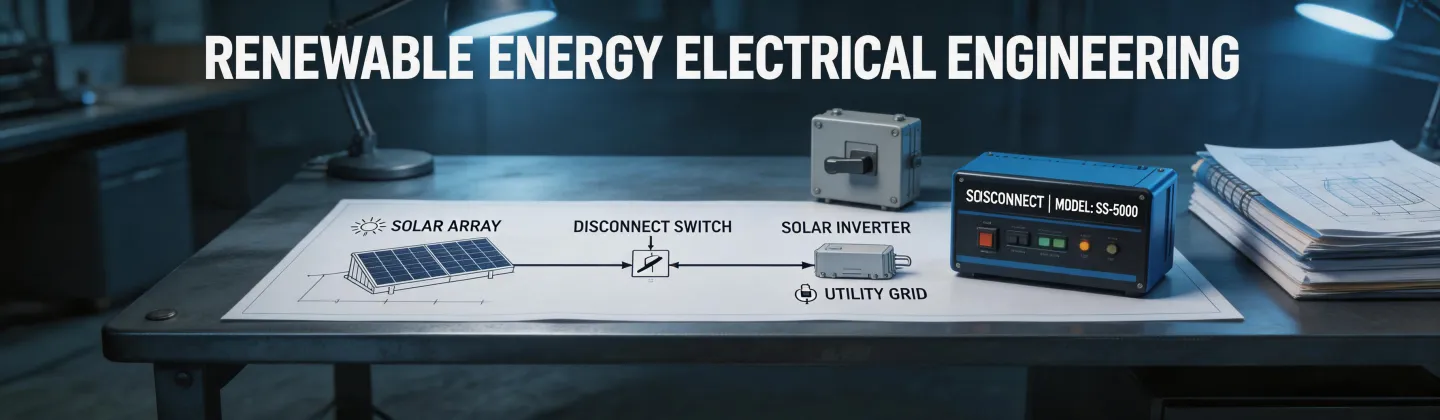
- Pay for the integration plan, not the promise. When I compared the ABB installation schematic vs. the GreenGiant proposal side-by-side, I finally understood why the details matter so much. One was a detailed engineering drawing. The other was a cartoon.
- Don't be afraid of the 'mix-and-match' solution. The vendor who said 'I'm not the best for this component' actually made the entire system better. Their specialization forced everyone else to step up their game.
I know I said I wanted one throat to choke. But as I learned, sometimes the best throat to choke is your own, out of frustration, when a promise you knew was too good to be true comes due. So glad I finally found partners who were honest about their boundaries.

Renata Silva
Renata Silva is a photovoltaic module analyst covering monocrystalline solar panels, bifacial modules, TOPCon and heterojunction designs, glass-glass construction, junction boxes, and module warranties. She interprets IEC 61215 and IEC 61730 evidence while comparing rated power, conversion efficiency, temperature coefficient, bifaciality, insulation, mechanical-load results, degradation assumptions, and tolerance. Her technical guides help EPC engineers, distributors, and project buyers separate qualification evidence from site-specific energy yield, climate exposure, installation constraints, and long-term performance risk.