-
The question everyone asks is 'what's your best price?' The question they should ask is 'what's included in that price?'
-
The outside AC disconnect box nobody thinks about
-
Wind turbines for homes: the reliability premium is non-negotiable
-
ABB power transformers: paying for certainty, not just hardware
-
The 'cheap' option resulted in a $1,200 redo when quality failed
-
What about the naysayers who say 'you're just paying for the name'?
-
The bottom line
I'll say it plainly: when the grid depends on it, I'm not shopping for the cheapest bid. After managing procurement for industrial-scale renewable projects for the last seven years, I've learned that the lowest quote often comes with hidden costs that don't show up on the invoice — they show up in missed deadlines, failed inspections, and emergency phone calls at 11pm.
This isn't a theoretical position. In Q2 2024, we had to choose between a lower-priced transformer package and an ABB solution that cost about 14% more. The cheap option? The vendor couldn't guarantee delivery before our interconnection deadline. ABB could. We paid the premium. The project came online on schedule, and our liquidated damages exposure — which would have hit six figures — never materialized.
The question everyone asks is 'what's your best price?' The question they should ask is 'what's included in that price?'
Most buyers focus on the headline number and completely miss what comes with it. I've audited $180,000 in cumulative spending across six years of renewable energy equipment purchases, and the pattern is consistent:
- The low bidder usually has exclusions buried in the fine print — testing, commissioning support, or specific compliance documentation that your bank or utility will require.
- Lead times get 'estimated' rather than guaranteed. When you're building a solar farm with a power purchase agreement start date, an estimate isn't good enough.
- Support after delivery is often reactive rather than proactive. When an inverter trips offline, you need someone who can diagnose the issue remotely — not a ticket queue.
Take ABB UPS systems as an example. We installed three for a data center client last year. The quotes we compared ranged from $18,000 to $24,000 for comparable specs. The lower-priced unit technically met the spec. But the warranty terms? Return-to-depot instead of on-site service. If that unit fails on a Tuesday afternoon, you're looking at days of downtime, not hours. The ABB unit came with on-site support within four hours and a five-year warranty that actually covers labor. That's the kind of cost difference that doesn't show up in the purchase order but shows up in your annual budget review.
The outside AC disconnect box nobody thinks about
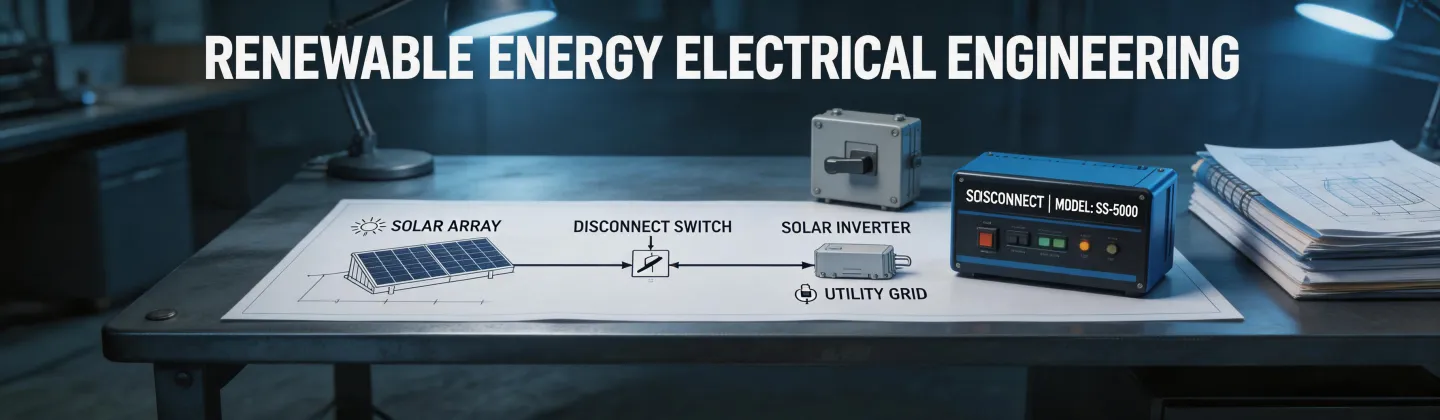
Here's something most people overlook: the small components matter just as much as the big ones. The outside AC disconnect box for a residential wind or solar installation — it's easy to spec the cheapest one because it's a $40 part. But when that cheap disconnect fails under load, it doesn't just trip a breaker. It can weld its contacts shut, creating a serious safety hazard for whoever works on the system later.
I've seen this happen. Not with ABB equipment, I should clarify — we switched to their disconnects after exactly one incident with a no-name brand. The replacement labor and the inspection delay cost us more than 20 times the price difference of the component itself. That's the kind of math that keeps me awake at night.
Wind turbines for homes: the reliability premium is non-negotiable
The phrase 'wind turbines home' gets a lot of search traffic, and everyone wants to know if they can slap a turbine on their roof and cut their electric bill in half. I get it — I've run the numbers myself. But here's the thing that separates a working system from a maintenance headache:
ABB's wind inverter technology isn't just about converting DC to AC efficiently. It's about grid compliance. Utilities are getting stricter about what they'll allow you to connect. If your inverter produces harmonic distortion that bothers your neighbors' electronics — and yes, this can happen — the utility can force you to disconnect until you fix it. ABB inverters are designed to meet strict grid codes that cheaper units often only claim on paper.
And if you're dealing with a smart meter installation? This is where people ask 'how can I make my smart meter dumb' because they don't want their utility monitoring their consumption patterns. I'm not going to help anyone tamper with utility equipment — that's both illegal and genuinely dangerous. But I will say this: if you're generating power from renewables, a smart meter is your friend, not your enemy. It lets you see exactly what your turbine or solar array is producing, and it's the difference between guessing and knowing whether your system is actually performing.
ABB power transformers: paying for certainty, not just hardware
Let's talk about ABB power transformers specifically. These are the pieces of equipment that utilities and industrial facilities depend on for decades. A transformer isn't something you replace casually — it's often the longest-lived asset in an electrical system.
The difference between a premium transformer and a budget one shows up in the specifications you can't see:
Losses. A more efficient transformer costs more upfront but saves money every single hour it runs. Over a 30-year lifespan, that difference can literally be thousands of dollars per transformer. I built a cost calculator after getting burned on hidden fees twice, and loss evaluation is the first thing I check now.
Overload capacity. Real-world loads don't respect nameplate ratings. ABB designs transformers with overload capability that lets them handle short-term spikes without damage. Budget transformers might handle the spike — or they might suffer premature insulation aging that nobody notices until it fails five years early.
Test data. When we commission a transformer, the utility asks for test reports. Full factory test documentation. ABB provides comprehensive data because they run those tests. Some budget vendors provide partial data, which means your project engineer has to decide whether to accept the risk.
In March 2024, we paid a 12% premium for an ABB transformer with guaranteed delivery for a substation upgrade. The alternative was waiting six more weeks for a cheaper unit. The project was tied to a regulatory deadline — missing it meant re-filing permits that had taken eleven months to obtain. The math was simple: the premium was about $4,200. Re-filing and waiting would have cost us at least $40,000 in soft costs and delay penalties.
The 'cheap' option resulted in a $1,200 redo when quality failed
I mentioned that 'free setup' offer that cost us $450 more in hidden fees — that was actually a printing project, not electrical equipment, but the principle transfers directly. The same logic applies every time someone tells me they found an inverter at half the price of an ABB model.
Let's be clear about something: I'm not saying every budget option is garbage. Some cheap equipment works fine for low-stakes applications. But when you're dealing with:
- A hospital that needs uninterruptible power for operating rooms
- A solar farm trying to meet a PPA deadline
- A homeowner relying on their turbine to keep the lights on during a storm
...then the cost of failure isn't the replacement part. It's the downtime, the frustration, and potentially the safety risk.
What about the naysayers who say 'you're just paying for the name'?
I hear this argument a lot. 'ABB is a big brand, you're paying for marketing.' Honestly, there's some truth to it — brand premiums exist. But the key is understanding what that premium is actually buying you.
For ABB specifically, you're buying:
R&D depth. ABB has been designing power electronics for over a century. Their inverter topologies and transformer designs are backed by engineering resources that a 20-person manufacturing operation simply can't replicate.
Global service infrastructure. If your ABB equipment fails in a remote location, there's a service engineer within reasonable distance. Try that with a vendor who ships from one warehouse in another country.
Interoperability. ABB makes everything from the solar inverter to the wind converter to the UPS to the transformer to the switchgear. When components are designed to work together, integration issues drop dramatically. I've seen too many projects where mismatched components created communication headaches between the inverter and the battery management system.
Now, am I saying you should never buy anything except ABB? No. That would be absurd. For simple applications where reliability isn't critical, a budget option might be perfectly fine. But when the cost of failure is high — and in the electrical world, it often is — the premium for certainty is the cheapest insurance you'll ever buy.
The bottom line
Here's where I land after six years of tracking every invoice and documenting every order in our cost tracking system: the goal isn't to pay the least. The goal is to pay less than the cost of failure.
That $4,200 premium for the ABB transformer? It's 2.8% of our annual procurement budget. But it saved us from a potential $40,000+ regulatory delay. The ABB UPS that cost $6,000 more than a competing quote? The UPS protected a client's operations that generate about $50,000 in revenue per hour. The math isn't even close.
If you're looking at ABB power transformers, inverters, UPS systems, or even a home turbine setup, don't ask 'is this the cheapest?' Ask 'what happens if this fails?' Ask 'is the delivery date guaranteed or estimated?' Ask 'what does the warranty actually cover?'
Then decide whether the premium is worth it.
In my experience, it almost always is. And that's not brand loyalty talking — that's my spreadsheet.

Renata Silva
Renata Silva is a photovoltaic module analyst covering monocrystalline solar panels, bifacial modules, TOPCon and heterojunction designs, glass-glass construction, junction boxes, and module warranties. She interprets IEC 61215 and IEC 61730 evidence while comparing rated power, conversion efficiency, temperature coefficient, bifaciality, insulation, mechanical-load results, degradation assumptions, and tolerance. Her technical guides help EPC engineers, distributors, and project buyers separate qualification evidence from site-specific energy yield, climate exposure, installation constraints, and long-term performance risk.