-
1. Define the duty cycle before the battery chemistry
-
2. Understand what ‘lithium-ion’ actually means
-
3. Price the system, not the battery cells
-
4. Check inverter and controls compatibility before ordering
-
5. Set up your ABB store account early
-
6. Plan commissioning, training, and warranty from day one
-
7. Calculate lifetime cost per usable kWh-cycle
-
Final notes: what I’d redo
If you’re in procurement for a solar installer, EPC, or utility-scale developer, you already know the challenge: battery storage projects look simple on paper, but the cost surprises show up after purchase.
This checklist is for people who buy ABB equipment—battery solar kits, grid-scale battery energy storage systems, and the power-conversion hardware around them. I’ve organized it into seven steps. Follow them in order, or skip to the one that’s causing your current headache.
What is a lithium ion battery? In one sentence: a rechargeable electrochemical storage system that moves lithium ions between electrodes. In procurement terms, it’s a 10- to 15-year asset whose total cost depends far more on cooling, control, and cycle life than on the cell price per kilowatt-hour.
I’ve managed procurement budgets for renewable projects for six years, tracked every invoice, and made my share of mistakes. The biggest one: treating a battery quote like a commodity purchase. It isn’t. What was best practice in 2020 may not apply in 2025—and this checklist is where I’ve landed. I’m not 100% sure it’ll stay the same next year. Don’t hold me to it.
1. Define the duty cycle before the battery chemistry
Grid-scale battery energy storage isn’t one product. It’s a range of products matched to an operating pattern. Before comparing prices, answer:
- How many cycles per day? One, two, sometimes three?
- Target depth of discharge: 80%, 90%, or more?
- Discharge duration: 2 hours, 4 hours, or longer?
- Ambient temperature range at the site?
- Grid services: frequency regulation, peak shaving, or renewable shifting?
The same lithium-ion chemistry can be a great investment for one use case and a money pit for another. I learned this the hard way when a ‘bargain’ storage unit failed to hold capacity under a high-cycle frequency-regulation schedule. The cell didn’t fail; the thermal design couldn’t keep up.
2. Understand what ‘lithium-ion’ actually means
Take this with a grain of salt, but if you ask me, “what is a lithium ion battery?” is the wrong question. The better question is: which lithium-ion chemistry and cell format is this vendor quoting?
Two chemistries dominate stationary storage:
- NMC (nickel manganese cobalt) — higher energy density, often used where space is tight.
- LFP (lithium iron phosphate) — lower energy density, but better cycle life and thermal stability.
In my opinion, LFP has become the default choice for most grid-scale battery energy storage in 2025. The energy density trade-off matters less on open land; cycle life matters a lot when the system runs daily. The ‘lithium-ion can’t handle grid-scale cycling’ thinking comes from an era when early installations lacked mature thermal controls. That changed.
Procurement questions to ask:
- Cell cycle life at the specified depth of discharge
- Warranty throughput limit in MWh over the term
- Cell and module certification: UL 9540A, IEC 62619, and local codes
3. Price the system, not the battery cells
The surprise wasn’t the battery cost. It was the balance-of-system: shipping, enclosure, HVAC, fire suppression, BMS, power conversion system, transformer, switchgear, and commissioning support. On some projects, those added costs were larger than the difference between battery suppliers.
When I compare vendors, I build a TCO spreadsheet. The columns: equipment, shipping, import and customs, installation labor, electrical interconnection, commissioning, training, spare parts, and warranty. Speed, quality, price. In that order? No—price first, then quality, then support. But a ‘cheap’ quote with poor integration support is the most expensive quote you’ll ever sign.
If a vendor won’t split out soft costs, treat that as a red flag.
4. Check inverter and controls compatibility before ordering
This is the step most people skip. A battery is just a box; the inverter or PCS is the brain. ABB’s power conversion and control technology is one reason I spec ABB for solar and storage projects. But the equipment still has to match the site’s grid code and control architecture.
Ask specifically:
- Can the PCS operate in grid-forming mode, or only grid-following? If your site is in a weak grid area, this is not optional.
- Does it support the required communication protocols — IEC 61850, Modbus TCP, DNP3?
- Will the battery BMS talk to the ABB inverter and controller without a custom gateway?
- Is the firmware version compatible with the plant controller your SCADA team wants?
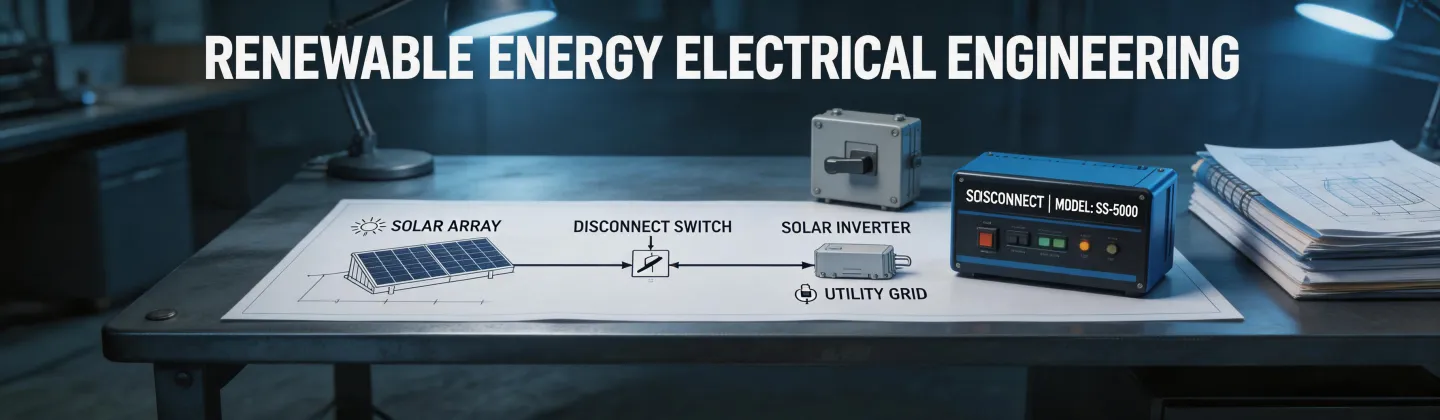
A ‘battery solar kit’ should include the power-conversion chain: PV inverter or hybrid inverter, DC combiner, disconnect, and transformer if required. If you buy the battery and the inverter from different suppliers, assign one party to manage integration. Otherwise you’ll spend months in meetings while both vendors point at each other.
5. Set up your ABB store account early
For small battery solar kits, replacement parts, and accessories, don’t wait until the day after installation to figure out procurement. Create an ABB store account and verify:
- Availability of spare parts for the specific product family
- Lead times for BMS boards, cooling fans, DC disconnects, and fuses
- Documentation and firmware downloads that require a registered account
For large grid-scale projects, the ABB store won’t replace your system integrator. But it’s useful for consumables and field-replaceable units. Don’t hold me to this, but when we checked a replacement BMS component, the ABB store listing showed a shorter lead time than our integrator’s quote. That changed our spares strategy.
6. Plan commissioning, training, and warranty from day one
Your battery solar kit isn’t commissioned when the lights turn on. It’s commissioned when the battery management system, inverter, site controller, and utility grid interface are all talking to each other and passing response tests.
I have mixed feelings about extended warranties. On one hand, they feel like a profit center. On the other, a single unplanned service trip to a remote site can wipe out the apparent savings from a cheaper vendor. I reconcile this by calculating a break-even: if the extended warranty costs more than the expected repair cost plus administration overhead, I skip it. If it’s close, I buy it.
Warranty language to review:
- Cycle life at what depth of discharge and at what temperature?
- Annual throughput limit.
- Response time for replacement parts.
- Exclusions for ‘improper operation’ — make sure the vendor defines it.
7. Calculate lifetime cost per usable kWh-cycle
The last step is not a spreadsheet exercise. It’s a procurement decision.
Let’s say Vendor A offers a lower price per kWh but has a shorter cycle life. Vendor B costs more upfront but maintains capacity longer. If you’re cycling the system daily, the cheaper battery often loses on a per-usable-kWh-cycle basis. Simple.
Formula I use:
Lifetime cost per cycle = (total installed cost − residual value) ÷ (usable energy × cycle life × round-trip efficiency)
That is the number to compare. Not price per kWh.
Also include degradation. A system that starts at 100% but drops to 70% after five years has a very different cost profile than one that degrades to 85%. The fundamentals haven’t changed: all lithium-ion batteries age. The execution has changed: modern BMS and thermal controls make degradation patterns more predictable—which is exactly why you should demand the data.
Final notes: what I’d redo
A short list of things I wish someone had told me:
- Don’t buy on price per kWh. Ever. Okay, rarely.
- Check the thermal derating curve for your site’s climate.
- Demand the cell manufacturer’s test report, not just the battery pack integrator’s datasheet.
- Confirm the interconnection study timeline before committing to a delivery date.
- Keep a spare BMS board and inverter fan on the shelf if the site is remote.
- If a vendor says ‘green’ or ‘recyclable,’ ask for substantiation. Per FTC Green Guides (16 CFR Part 260), environmental claims need to be backed up.
Procurement for ABB battery solar kits and grid-scale storage isn’t getting simpler—but the suppliers who give you transparent data are the ones worth keeping. I’d rather pay for transparency upfront than spend the same money on hidden costs later. Done.

Renata Silva
Renata Silva is a photovoltaic module analyst covering monocrystalline solar panels, bifacial modules, TOPCon and heterojunction designs, glass-glass construction, junction boxes, and module warranties. She interprets IEC 61215 and IEC 61730 evidence while comparing rated power, conversion efficiency, temperature coefficient, bifaciality, insulation, mechanical-load results, degradation assumptions, and tolerance. Her technical guides help EPC engineers, distributors, and project buyers separate qualification evidence from site-specific energy yield, climate exposure, installation constraints, and long-term performance risk.