-
1. Is the ABB inverter worth the premium over generic brands?
-
2. How much does ABB's extended warranty cost, and is it worth it?
-
3. What's the real deal with ABB disconnect switch handles?
-
4. Is solar panel washing actually worth the cost?
-
5. What should I budget for Wartung Wallbox (EV charger maintenance)?
-
6. Tesla Powerwall 2 vs Powerwall 3 price: which is smarter for a business?
-
7. What's the biggest cost mistake you see in renewable energy projects?
People ask me a lot about renewable energy equipment costs—especially when ABB is in the mix. I've been a procurement manager at a regional solar and EV charging installer for six years, managing an annual equipment budget around $850,000. I've tracked every order in our cost system and negotiated with 30+ vendors. This FAQ is based on those spreadsheets—and a few mistakes I'm willing to admit to.
1. Is the ABB inverter worth the premium over generic brands?
Honestly, it depends on your project—and on how you calculate cost. I've spec'd ABB inverters on maybe 70 installs since 2019, give or take. The upfront price is usually 15–20% higher than budget brands, but I've seen that gap disappear fast when a generic unit fails in Year 2 and the labor to replace it swamps the savings. In one case, the replacement labor cost more than the ABB option would have cost on day one. What makes ABB worth it for me is the support network: their technical hotline actually picks up, and warranty claim documentation is straightforward. But don't assume all ABB inverter lines have the same terms. Some offer 5-year warranties, others require a paid extension. And lead times can be a killer. We've waited eight weeks for a specialized unit during grid upgrade season. If your deadline is fixed, that's a deal-breaker. So the answer is: run a TCO model, add a lead-time column, and then decide. And don't forget to compare real-world performance, not just sticker efficiency. Shading, module mismatch, and the MPPT algorithm can swing output more than a 0.5% efficiency rating.
2. How much does ABB's extended warranty cost, and is it worth it?
Extended warranties are a profit center for distributors, but they're not always a bad deal. For a typical ABB solar inverter in the 50kW range, an extra 2-year extension costs about 4–7% of the unit price in my recent quotes. The question is whether the expected repair cost is higher than that. Based on the failures we've seen over the past six years, I'd argue it's borderline for string inverters with good track records, and more favorable for high-voltage DC units or those installed in dusty, hot environments. Here's what most people don't realize: the OEM warranty often covers parts but not labor. A warranty extension might still not cover a mid-morning truck roll, which is $250–$500 alone. So read the fine print, calculate the probability, and if you're financing, ask whether the extension can be rolled into the equipment loan. That way it's paid over time and protected by the same collateral.
3. What's the real deal with ABB disconnect switch handles?
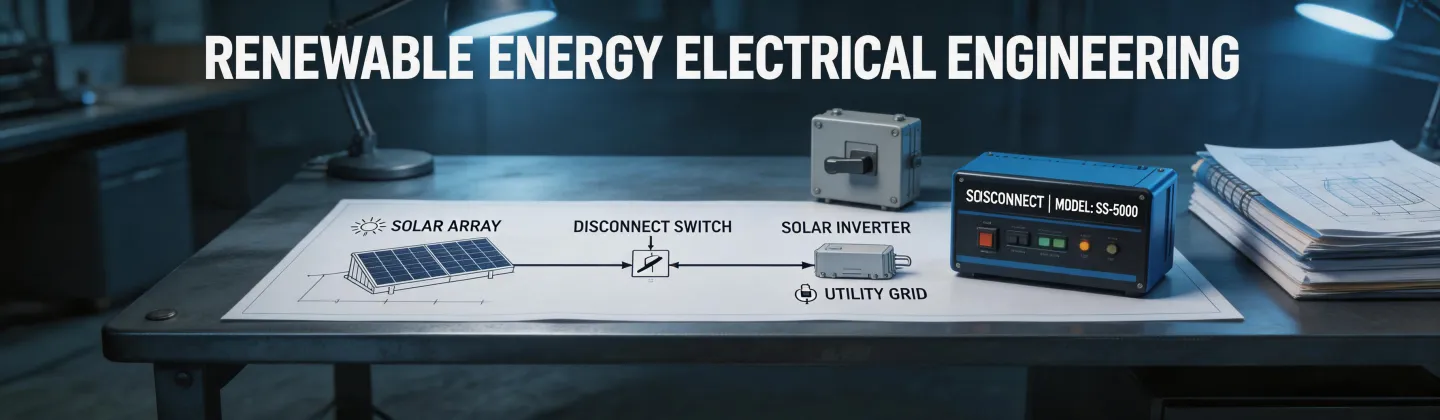
An ABB disconnect switch handle looks like a generic part—until you try to install it. The handle has to match the specific enclosure, the interlock kit, and the operating shaft length. Get that wrong, and your electrician is making an unplanned trip to the supply house. I did this once with a $30 generic handle, and the job ground to a halt. The crew had to fabricate a sleeve, and by the time we accounted for labor, the 'cheap' handle cost us over $900. My rule now: buy OEM for grid-tied disconnects, and buy in bulk. On a recent order of 12 handles, our distributor gave 12% off just for asking. Also check whether you need a left-hand or right-hand version. It's not the flashiest line item, but it's the kind of detail that turns a profitable job into a break-even one.
4. Is solar panel washing actually worth the cost?
For most commercial arrays, yes—but only if you have baseline data. We monitor a 140kW system where a deep clean in early summer recovered about 6% of average daily output. At our municipal rate, that means an extra $180 per month of production, which pays for the cleaning in under two months. In a wetter region, the payback might be longer—or never. Dust, bird droppings, and pollen vary by site, so don't trust a one-size-fits-all schedule. What I push back on is the premium 'eco-friendly' cleaning package upsell. Per FTC guidelines, environmental claims like 'green' or 'non-toxic' must be substantiated. If the cleaning company can't show you a spec sheet for the chemicals they're using, skip the upsell. A simple deionized-water wash and a visual inspection is usually enough—and for ABB inverters, scheduled cleaning may be a warranty condition, so log the service date and keep the invoice. And one more thing: use the right equipment. Abrasive brushes or wrong chemicals can damage the glass and void the panel warranty—another hidden cost that's not on the proposal.
5. What should I budget for Wartung Wallbox (EV charger maintenance)?
The German term Wartung Wallbox just means wallbox maintenance, and it's a standard cost in international projects. For ABB wallboxes and other commercial EV chargers, our service contracts run $200–$400 per unit per year, depending on whether it's a remote check or a physical inspection of cable strain relief, torque settings, lockout functions, and firmware updates. The hidden issue is contract exclusions. Some providers charge extra for firmware updates or emergency calls, and 'consumables' might not include the ABB charging cable lock or mounting screws. Here's something vendors won't tell you: for ABB equipment, factory-trained technicians matter. There's a specific torque sequence for the power connections, and if a generic electrician guesses, you could end up with a warranty claim rejected due to improper maintenance. It's not the flashiest line item, but it protects the more expensive charger.
6. Tesla Powerwall 2 vs Powerwall 3 price: which is smarter for a business?
I can't give you one universal price because quotes vary, but I can share what we've seen in late 2024. Powerwall 2 units were around $8,900–$9,500 before installation, while Powerwall 3 started closer to $10,200. The real difference is in the integrated inverter and direct solar input on Powerwall 3, which can reduce parts and labor for new installations. Powerwall 2 is sometimes discounted as distributors clear inventory, and for retrofit projects it can be a solid value if you already have a separate inverter. What people often compare is battery price per kWh, but the wiser metric is installed cost per usable kWh—including gateway, permits, and labor. As of 2025, best practice is to design the storage and inverter as one system, not bolt the battery onto whatever you had. In several projects, we paired Tesla Powerwall with an ABB inverter because the ABB unit's communication suite gave us better control for similar money. Both are reliable; the math decides. We've also seen utility rebates that favor one model, so don't lock in a choice until you check local incentive programs. A rebate can shift the net price by 20% or more.
7. What's the biggest cost mistake you see in renewable energy projects?
Underestimating commissioning time. It's the number one blowout in my cost tracking system. You can spec a perfect ABB inverter, buy the right disconnect handles, schedule the solar panel washing, and set up a wallbox maintenance contract—then the utility review takes three weeks and the crew sits around. Idle time plus rebooking fees has added $1,500 to $4,000 on some jobs. That's why every budget I prepare now includes a 10–15% contingency line for commissioning, not for hardware. The equipment pricing is the easy part. Site-specific surprises—grouting, trenching, permits, or waiting on the grid operator—are what wreck forecasts. Trust me on this one: the last mile costs more per hour than any inverter you'll buy, and a good procurement plan builds in time for it.

Renata Silva
Renata Silva is a photovoltaic module analyst covering monocrystalline solar panels, bifacial modules, TOPCon and heterojunction designs, glass-glass construction, junction boxes, and module warranties. She interprets IEC 61215 and IEC 61730 evidence while comparing rated power, conversion efficiency, temperature coefficient, bifaciality, insulation, mechanical-load results, degradation assumptions, and tolerance. Her technical guides help EPC engineers, distributors, and project buyers separate qualification evidence from site-specific energy yield, climate exposure, installation constraints, and long-term performance risk.