-
The 7-step procurement checklist
-
Step 1: Lock the solar system background before anyone quotes a price
-
Step 2: Answer how many amps for a Level 2 charger, then check the circuit
-
Step 3: Put every ABB disconnect switch on the bill of materials
-
Step 4: Quote exact SKUs and compare landed cost
-
Step 5: Ask what happens after delivery
-
Step 6: Check the code edition and utility requirements
-
Step 7: Test before you accept
-
Step 1: Lock the solar system background before anyone quotes a price
-
What this checklist is really about
-
A note about solar system colouring pages and backgrounds
I'm a procurement manager at a 40-person electrical contractor, and I've managed roughly $320,000 a year in solar and EV-charging equipment budgets for six years. I've run this process on maybe 200 projects. Maybe 180, I'd have to check the system. I don't say that to impress you; I say it so you know whose checklist you're reading. This is the seven-step process I use before I approve any project that involves ABB hardware, from a Level 2 wallbox to a disconnect switch.
Use this if you're planning a solar array, an EV charging station, or a combined system for a commercial or residential site. If you're here for solar system colouring pages, I haven't forgotten you—there's a note at the end.
The 7-step procurement checklist
Step 1: Lock the solar system background before anyone quotes a price
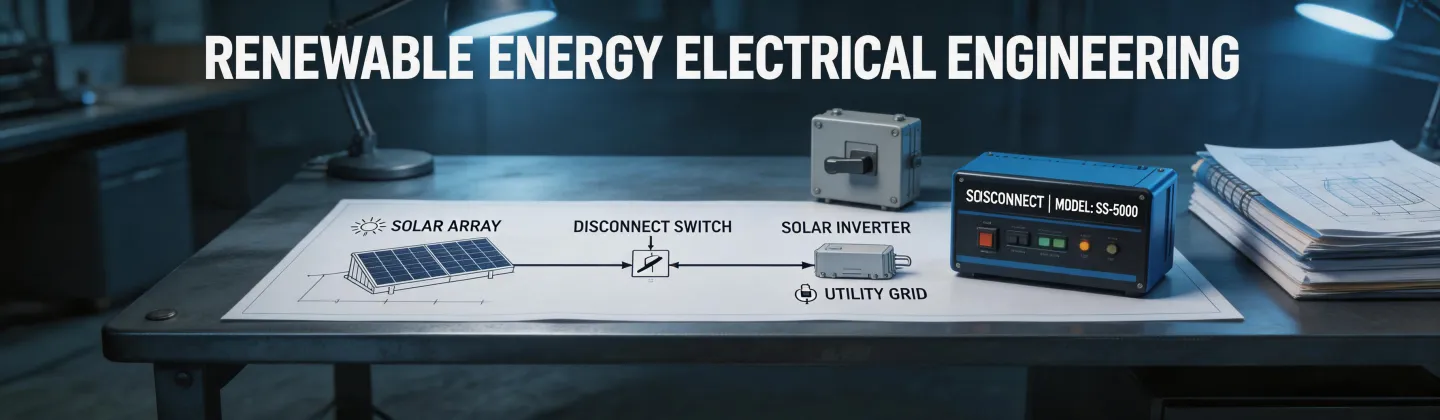
I've been burned by a quote that looked complete but had no real design background. By background, I mean the single-line diagram, panel capacity, voltage, wire runs, and load profile. A photovoltaic system without that background is a pile of hardware. If your engineer can't provide a stamped electrical background, any number on the quote is a placeholder.
This is also where a solar system background protects you from oversizing or undersizing the service. A site with insufficient capacity will require a service upgrade. That is a line item you want to see before you sign, not after the panels are on the roof. If the project also includes a transformer, switchgear, or battery storage, add those interconnection details. This step is easy to skip because it's not a purchase order. It's also the step that catches the $45 ABB disconnect switch you'll need after the inspector asks where the code-compliant disconnecting means is.
Step 2: Answer how many amps for a Level 2 charger, then check the circuit
A Level 2 charger operates on 208-240V AC, but the amp draw depends on the charger and the circuit. The question isn't what Level 2 means; it's what the charger is set to draw. Common configurations I approve:
- 16A on a 20A circuit: about 3.8 kW
- 24A on a 30A circuit: about 5.8 kW
- 32A on a 40A circuit: about 7.7 kW
- 40A on a 50A circuit: about 9.6 kW
- 48A on a 60A circuit: about 11.5 kW
What most people don't realize is that Level 2 doesn't mean a specific amperage. It means 208-240V AC. Level 1 is 120V and usually draws 12-16A, so when someone asks how many amps for a Level 2 charger, the answer depends on the unit and the circuit. ABB's EV charging solutions range from the Terra AC wallbox up to high-power DC fast chargers; the same sizing logic applies at the AC input, but a DC charger is not a 50A circuit.
For a single-family home, I usually recommend a 40A charger on a 50A circuit. For a commercial lot with multiple units, 32A stations plus load management often makes more sense. The right answer depends on your service capacity and how fast vehicles need to leave. One more thing: on 240V, a 40A charger delivers about 9.6 kW; on 208V, the same charger delivers about 8.3 kW. Voltage changes the charging time, and charging time can change your budget if drivers get paid hourly to wait.
Step 3: Put every ABB disconnect switch on the bill of materials
An inverter has a built-in disconnect in many cases, but that doesn't cover everything. A PV system often needs a DC disconnect for the array and an AC disconnect near the inverter. An EV charger may need a lockable disconnect if the service panel isn't within sight. This is where an ABB disconnect switch enters the budget. ABB's OT-series load break switches are for AC; PV-series switches are designed for DC interruption, which is not the same thing.
Count them: array DC disconnect, inverter AC disconnect, charger disconnect if required. Put every one on the bill of materials before the submittal goes out. Don't let someone substitute an AC switch for a DC disconnect. DC arcs don't self-extinguish as easily. I'd rather pay for the right ABB disconnect switch now than get a red tag from the inspector later.
Step 4: Quote exact SKUs and compare landed cost
Here's a line I found in our Q2 2024 audit: ABB Installation Products Inc 56501 54506SP. If you type only 'ABB disconnect switch,' you won't find it. You need the full part number. That's normal in procurement. The danger is when a distributor says 'we have something equivalent.' If the engineer specified that exact SKU, any substitution needs written approval. It may be equivalent for current rating but different for short-circuit withstand or enclosure rating.
Vendor A quoted one price. Vendor B quoted $190 less on the unit, but B's freight was $140, handling was $35, and delivery was a week later. With a crew sitting at $900 per day, B was the more expensive option. The lowest line price is not the lowest total cost.
Here's something vendors won't tell you: the first quote is rarely the final price for an ongoing relationship. Once you've proven you're a reliable customer, there is usually room to negotiate on shipping or service fees. But that only helps if you're tracking the total cost, not just the line price.
Step 5: Ask what happens after delivery
I've seen line items look cheap until you include commissioning, training, remote support, firmware updates, and permit fees. A wallbox is not installed just because it's mounted. An inverter is not commissioned just because it's wired.
When I compare quotes, I add a column for post-delivery costs. Free setup is not free if it requires a separate visit, extra paperwork, or a travel charge. That's not a reason to avoid a vendor; it's a reason to get the full cost in writing before you commit.
Step 6: Check the code edition and utility requirements
As of January 2025, many states are on the 2020 or 2023 edition of NFPA 70, but your local jurisdiction may have amendments. Under Article 625, EV charging circuits are continuous loads, so the breaker rating must be at least 125% of the charger current. A 40A charger needs a 50A breaker. A 48A charger needs a 60A breaker. I have seen a 48A charger on a 50A breaker because someone wanted to save $60. It tripped during the first real charging session.
Utilities also matter. Some require load management, a separate meter, or an approved charging schedule. If the quote doesn't mention utility coordination, that's a missing line item, not a bonus. Oh, and utility rebates can change the total cost calculation, but only if you document them before you order. Don't assume the local inspector follows the same rules as the neighboring county; verify with your authority having jurisdiction.
Step 7: Test before you accept
The last step is the one people want to skip. I skipped it once and paid for it. A charger was configured at 48A, but the circuit was only rated 40A. The breaker tripped during a customer demonstration. The cost wasn't just the service call; it was the trust.
Now every project gets a live test: plug in a real vehicle, read the actual amperage, watch the disconnect switch operate, and test solar inverter startup. It takes an hour and it catches mistakes that paperwork won't. If a vendor says factory testing is enough, that's fine, but factory tests don't verify my crew's wiring.
What this checklist is really about
Over six years, I've learned that the projects that come in under budget are not the ones with the best negotiation skills. They're the ones with the fewest change orders. The cheapest solar system is not the one with the lowest inverter price. It's the one that works the first time. Total cost thinking means you count the missed days, the inspector call-backs, and the after-hours support calls. Those are costs, and someone in the budget has to pay them.
A note about solar system colouring pages and backgrounds
I know some of you are here because your search history includes solar system colouring pages or a solar system background for a classroom project. That's a different solar system. When my daughter needed a handout, I used NASA's Space Place; it's free and safe for kids. And if you need a space-themed background for a video call, those pages work as source images. But if you're here for a photovoltaic solar system, the background you need is the electrical design context from Step 1. Both need planning—just different kinds.

Renata Silva
Renata Silva is a photovoltaic module analyst covering monocrystalline solar panels, bifacial modules, TOPCon and heterojunction designs, glass-glass construction, junction boxes, and module warranties. She interprets IEC 61215 and IEC 61730 evidence while comparing rated power, conversion efficiency, temperature coefficient, bifaciality, insulation, mechanical-load results, degradation assumptions, and tolerance. Her technical guides help EPC engineers, distributors, and project buyers separate qualification evidence from site-specific energy yield, climate exposure, installation constraints, and long-term performance risk.