-
The morning the water heater quit
-
A domestic hot water heat pump was the first honest quote
-
Pairing the heat pump with solar panels
-
Then I found the 1,000 watt vertical wind turbine
-
A complete off-grid wind generator costs more than a turbine
-
The turning point: actual wind data
-
What we installed and why I trust itemized quotes
The morning the water heater quit
By the time I got to the shop that morning, the floor was already wet. It was mid-January 2025 in western Massachusetts, about 9 degrees F outside, and the 16-year-old electric hot-water tank that served our maintenance building had been leaking since sometime overnight. I stepped into two inches of water, swore, and called the plumber. Then I called the electrician. Then I did the part I am actually paid to do: I started pricing the replacement before the emergency markup set the budget.
I manage procurement for a 42-person agricultural services company in western Massachusetts. We repair irrigation systems and farm equipment for farms within about 60 miles. For six years I have tracked every utility invoice and purchase order, so I knew that old water heater was not just making hot water. It was making a line item I wanted to get rid of.
A domestic hot water heat pump was the first honest quote
The old tank was an 80-gallon electric unit, original to the building. It fed three sinks, a small kitchenette, and a wash-down nozzle. There was no submeter on it, so I estimated its usage from our monthly bill history: roughly 3,200 kWh a year. At our blended rate of about $0.27/kWh, that was close to $850 a year just to keep water hot in one building.
Three contractors quoted standard replacement tanks. The cheapest complete install was $1,900. One contractor also quoted an 80-gallon heat pump water heater, which the supply house listed on the order sheet as a domestic hot water heat pump. Most people just call it a heat pump water heater. Instead of using resistance coils, it pulls heat from the surrounding air and moves it into the tank through a refrigeration cycle.
According to Energy Star (energystar.gov), heat pump water heaters use 60 to 70 percent less electricity than electric resistance models. That matched the estimate we were getting. The heat pump unit was $4,680 installed, and our local utility rebate knocked off $800, so the real cost was $3,880. Compared with the $1,900 resistance replacement, the extra cost was about $1,980. The projected savings were close to $550 a year. That is a simple payback of under four years before electricity prices even go up.
I want to be honest about precision here: the old tank was not submetered, so that 3,200 kWh figure was an estimate based on comparing winter and summer bills. Still, the direction was obvious. A heat pump water heater was the better purchase even before we talked about solar.
Pairing the heat pump with solar panels
The heat pump made the water-heating load much smaller. That is what made rooftop solar practical. The maintenance building has a south-facing roof with no shade, so we asked a solar installer to price a system that could cover the heat pump plus part of the building's other loads.
The quote was for a 5.6 kW array. An NREL PVWatts model for our roof predicted about 6,400 kWh in the first year. The installed cost was $17,600 before the 30 percent federal investment tax credit, or roughly $12,300 after. At our effective electricity rate, that solar production was worth around $1,700 a year on paper.
This is the combination that people search for when they type heat pump with solar panels. It is not one magic appliance. It is a heat pump water heater running beside a solar array that offsets its electricity use. Together, the hot-water upgrade and the PV system were projected to cut our grid bill by about $2,200 to $2,300 in year one. On a combined net cost of around $16,200, the simple payback was somewhere in the seven-to-eight-year range. For a rural business that plans to keep its buildings for another 20 years, that was a reasonable project.
Then I found the 1,000 watt vertical wind turbine
The solar quote needed about a week of back-and-forth on utility paperwork. During that week, I made the mistake every procurement person makes eventually: I kept researching after the decision was basically made.
That is when I found the vertical turbines online. A residential vertical wind turbine, sometimes sold as a vertical windmill generator, looked perfect in the video. No yaw mechanism. No loud propeller. It spun quietly on a short pole and claimed 1,000 watts of output. The price was $1,290 with free shipping. I almost clicked buy.
For about an hour, I convinced myself it was rational. At $0.27/kWh, the turbine only needed to produce around 480 kWh a year to pay for itself over ten years. That sounded easy. Then I read the fine print and realized the $1,290 price was for the rotor, the alternator, and a charge controller. It was not for a system that produces usable power at a wall outlet.
So I did what I do with every vendor who quotes me something: I asked for the full price to make it work.
A complete off-grid wind generator costs more than a turbine
A wind installer took the time to answer me properly. He asked about the site, the trees, the building height, and the local zoning. Then he sent a line-item quote for a complete off-grid wind generator system. I have kept that quote because it taught me more than any blog post I have read since.
- 1,000 W vertical wind turbine plus charge controller: $1,290
- 50-foot tilt-up tower, guy wires, and anchor kit: $2,350
- Concrete base, excavation, and equipment rental: $1,100
- 48V 100Ah LiFePO4 battery bank: $1,400
- 2,000 W pure sine inverter/charger: $800
- Dump load, DC and AC disconnects, breakers, surge protection, grounding: $1,020
- Trenching, copper cable, and conduit from tower to battery room: $1,650
- Installation labor: $2,600
- Permits, stamped drawings, and final inspection: $700
The total was $12,910. And that total still did not include the eventual replacement cost of the battery bank, or the cost of pulling the tower down when a guy wire fails or the turbine bearing wears out. It was a real quote from a real installer, not a scare tactic. He even said the turbine itself might be fine. The system around it was the expensive part.
I also learned that the word off-grid changes everything. If you connect the same turbine to the grid, you need an approved inverter, an AC disconnect, and a utility interconnection agreement. If you want power when the grid is down, you need the battery bank anyway. There is no cheap version of this. There is only a version where somebody else pays for those parts later.
The turning point: actual wind data
The same installer was blunt about our site. The maintenance building sits near a line of mature maples and pines, and the town's height restriction made it impossible to put the turbine high enough to clear them. The U.S. Department of Energy's Small Wind Guidebook recommends placing a turbine at least 30 feet above anything within 500 feet. On our property, that would have meant a tower taller than the zoning allowed.
He also modeled the expected output at the highest legally allowed height. The average wind speed was around 4.2 m/s, which is workable for some applications but not great. His conservative estimate was 400 to 800 kWh per year from the 1,000 watt turbine. At our electricity rate, that was worth $110 to $215 a year. Against a $12,910 installed cost, the math did not survive contact with reality.
I am not here to tell everyone to avoid vertical wind turbines. If you have open land, a genuinely windy site, and a need for off-grid power, a small wind generator can make sense in a way that it did not for us. But the turbine was never the real purchase. The tower, the batteries, the electronics, and the labor were the real purchase. The online price was just the hook.
What we installed and why I trust itemized quotes
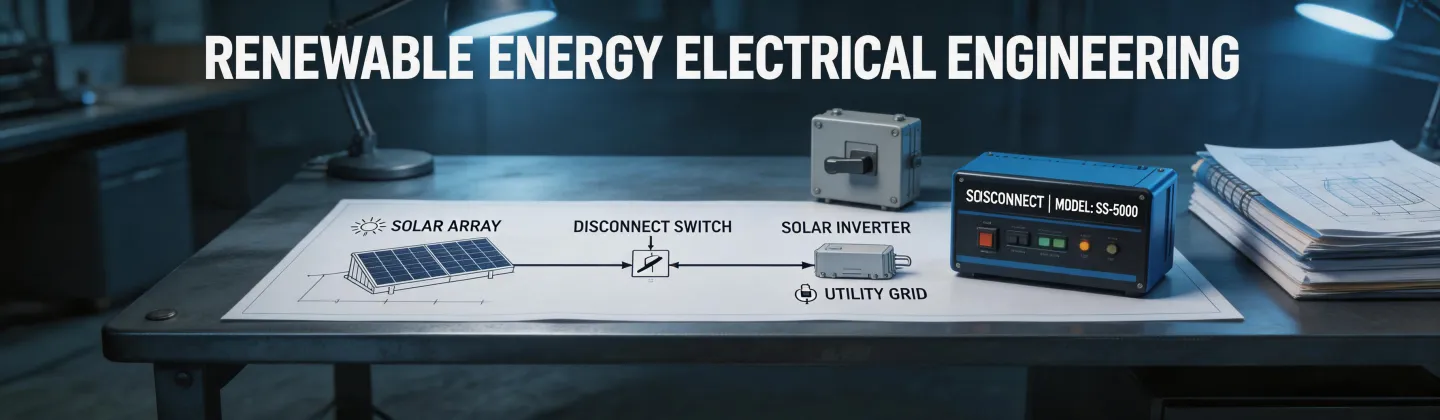
In the end, we did not buy the wind turbine. The heat pump water heater went in first, and the 5.6 kW solar array followed in the spring. The electrical contractor used ABB surge protection, breakers, and disconnects in the final system. That was not an accident. When you maintain irrigation pump panels for as long as we have, you learn that the brand of the electrical components matters. A no-name breaker that fails on a Sunday costs far more than the breaker itself.
Here is the cost-control rule I keep coming back to now: quote the complete system, not the shiny part. A vendor who hides the tower, the batteries, the disconnects, and the labor in vague line items is not giving you a lower price. They are giving you a lower estimate. The real price arrives later, in change orders and service calls.
The renewable project that made sense for us was the boring one. A domestic hot water heat pump with solar panels does not look impressive on a fence line. It does not spin in the wind. But its numbers were transparent from the first page of the quote, and that is exactly why I trusted it.

Renata Silva
Renata Silva is a photovoltaic module analyst covering monocrystalline solar panels, bifacial modules, TOPCon and heterojunction designs, glass-glass construction, junction boxes, and module warranties. She interprets IEC 61215 and IEC 61730 evidence while comparing rated power, conversion efficiency, temperature coefficient, bifaciality, insulation, mechanical-load results, degradation assumptions, and tolerance. Her technical guides help EPC engineers, distributors, and project buyers separate qualification evidence from site-specific energy yield, climate exposure, installation constraints, and long-term performance risk.