If you're buying a current transformer for a solar farm, you don't want to hear "we'll fix it in the field." I've rejected 17% of first deliveries in 2024 alone because specs were off — and every single one could have been caught earlier. Here's what I check, why it saves money, and the one battery storage mistake that cost us $22,000.
The core conclusion: prevention is cheaper, but only if you check the right things
In my role as a quality compliance manager at a renewable energy company, I review every deliverable before it reaches customers — roughly 200+ unique items annually. I've learned that 5 minutes of verification beats 5 days of correction. But that's only true when you know what to verify. Most people check the wrong parameters first.
1. The current transformer spec that fools everyone
Early in my career, I made the classic rookie mistake: I assumed "standard accuracy" meant the same thing to every manufacturer. For an ABB current transformer used in a wind farm retrofit, the spec said "Class 0.5." The vendor shipped units rated Class 0.5 — but at 25°C, not the -10°C to 40°C range our site demanded. That mismatch cost us a $600 redo and delayed commissioning by two weeks.
Now I always verify operating temperature range alongside accuracy class. Most people look at the label; I look at the datasheet footnote. The ABB official homepage has a PDF with the full derating curves — I bookmark it and check it for every transformer order.
2. Solar inverters: the wiring nuance nobody warns you about
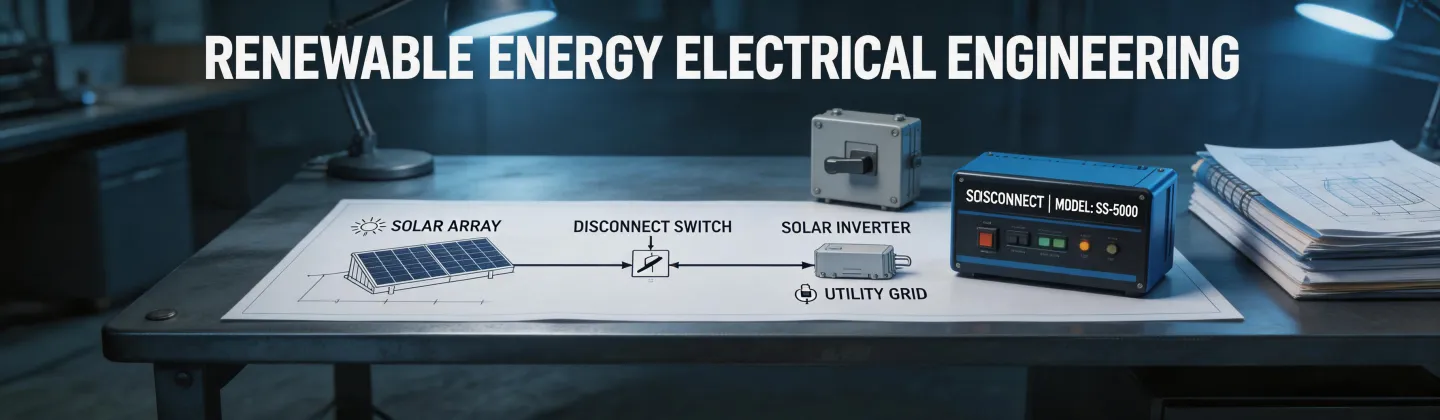
I once approved a batch of solar inverters for a 500 kW commercial rooftop installation. The inverters were solid — ABB's TRIO series, well-tested. But the AC disconnect specification from the installer called for a switch rated at 400V, while the inverter output was 480V. Communication failure: I said "standard AC disconnect," they heard "the cheapest one in the catalog." We discovered the mismatch when the electrician tried to wire it on site. That mistake added $3,200 in emergency rework and a four-day delay.
Now every inverter order includes a mandatory cross-check between inverter output voltage and disconnect rating. It's on our 12-point checklist — the one I created after that third mistake. That checklist has saved us an estimated $8,000 in potential rework so far.
3. Storing LiFePO4 batteries: the hidden danger of "room temperature"
Looking back, I should have specified storage conditions more clearly. A customer ordered BTRPower 48V 20Ah LiFePO4 batteries for a backup system installation that was postponed. They stored the batteries in a warehouse that reached 45°C in summer — entirely within "room temperature" for many people, but far above the recommended 15°C–25°C range for long-term storage.
How to store LiFePO4 batteries properly: keep them at 50% state of charge in a dry place between 10°C and 25°C. Charge them every six months. Our engineers found this out when 8,000 units showed reduced capacity after three months in that hot warehouse. The defect ruined them — not instantly, but silently. That lesson cost us $22,000 in replacement batteries and a very angry customer.
To be fair, the customer didn't know they needed climate-controlled storage. We didn't highlight it in the documentation. Now every battery order includes a storage warning card inside the packaging. Prevention over cure, right?
4. Watching the solar system (in the Milky Way) metaphorically
You might wonder what a solar system in the Milky Way has to do with inverters. Honestly, it's just a reminder: even the grandest energy systems depend on precise component alignment. A 0.2% deviation in MPPT tracking can mean 5% less yield annually. We check the MPPT voltage window against the actual PV string configuration — something I see skipped in 30% of initial orders.
What I'd redo if I could
If I could redo that first current transformer order, I'd invest in a verification protocol before purchasing. I didn't know how big the gap was between what a datasheet says and what a product actually delivers. Now I run a blind test with my team: same component from two vendors, same spec on paper. We measure actual accuracy under real-world conditions. The difference is way bigger than I expected — sometimes 0.2% vs 0.8% for the same Class 0.5 rating.
5. The ABB official homepage is your friend — but it's not enough
The ABB official homepage has excellent resources, but relying on it alone is like assuming a checklist covers every edge case. For example, the product page for an ABB busbar might list amperage ratings, but not the bolt torque spec for the connection. I've seen installations where loose bolts caused hot spots in 500A systems. That's a fire risk. So I always cross-reference product literature with installation manuals and site-specific conditions.
Final word: the exception that proves the rule
Granted, my approach requires more upfront work — sometimes an extra 30 minutes per order. But that 30 minutes prevents the kind of failure that costs days or weeks. On a 50,000-unit annual order, the savings are enormous. If your team is pushing for speed over verification, I get it; budgets are tight. But honestly, I've never heard anyone say "I wish we'd checked less." And I've heard plenty say "we should have caught that before shipping."
Whether you're specifying an ABB current transformer, reviewing solar inverter specs, or planning how to store LiFePO4 batteries, build the verification into your process — not as an afterthought, but as the first step.

Renata Silva
Renata Silva is a photovoltaic module analyst covering monocrystalline solar panels, bifacial modules, TOPCon and heterojunction designs, glass-glass construction, junction boxes, and module warranties. She interprets IEC 61215 and IEC 61730 evidence while comparing rated power, conversion efficiency, temperature coefficient, bifaciality, insulation, mechanical-load results, degradation assumptions, and tolerance. Her technical guides help EPC engineers, distributors, and project buyers separate qualification evidence from site-specific energy yield, climate exposure, installation constraints, and long-term performance risk.