When I first started reviewing solar-plus-storage proposals back in 2022, I assumed that integrated all-in-one inverter-charger systems were always the cleaner choice. Less equipment, fewer connections, simpler compliance checks. That was before our Q1 2024 quality audit forced a complete rethink on how we evaluate disconnects and charging infrastructure.
I'm a quality and brand compliance manager at a renewable energy company. I review every technical proposal and spec sheet before it reaches our B2B customers—roughly 200 unique items annually. I've rejected about 12% of first deliveries in 2024 due to specification mismatches or regulatory gaps. This article compares two distinct approaches to installing EV charging alongside solar and battery storage: using ABB's integrated inverter-charger solution versus deploying separate components (a solar inverter, a standalone EV charger, and a disconnect switch).
Note: I'm not a test engineer, so I can't speak to lab-level efficiency curves. What I can tell you from a quality and field-reliability perspective is where each approach tends to succeed or fail.
The Core Framework: Integration vs. Independence
The debate boils down to a single question: do you control power conversion and EV charging with one brain, or let two brains talk to each other?
- Integrated approach (e.g., ABB's combined solar inverter with EV charging output): One power conversion stage, one control system, shared MPPT and DC bus.
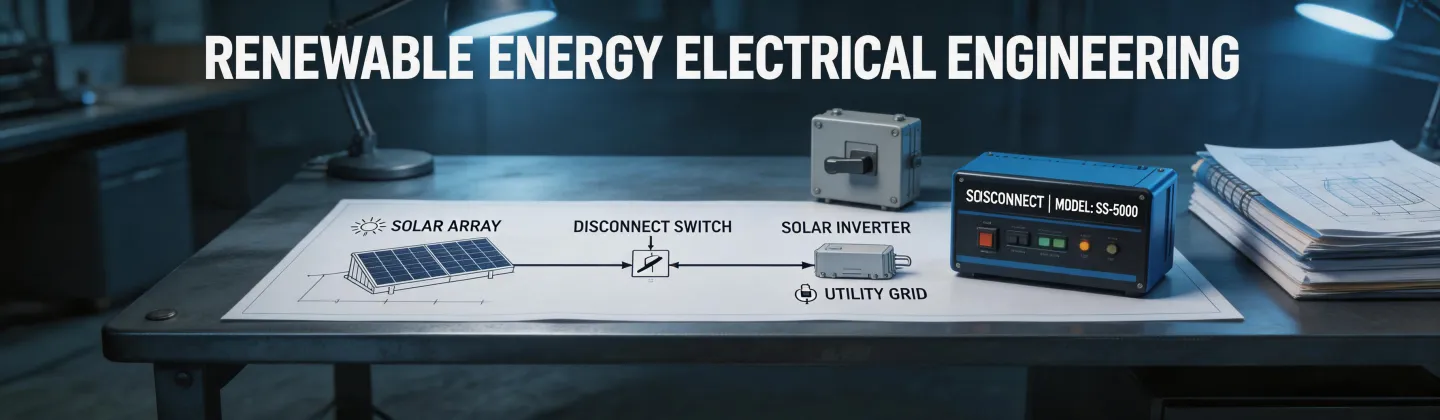
- Component approach: Separate solar inverter (like ABB's PVS-xxx series), standalone EV charger (like ABB's Terra AC wallbox), and a fusible disconnect switch (like ABB's S800 series) between them.
Five years ago, the integrated option barely existed for residential-to-commercial scale. As of January 2025, it's a viable choice—but not always the right one.
Dimension 1: Electrical Protection & Compliance
This is where I made my initial misjudgment. I assumed integrated systems automatically had better protection because everything was in one box. That's not always true.
Integrated systems typically include internal overcurrent and arc-fault detection for both PV and charging paths. But here's the catch: they share a single DC bus. If the EV charger's internal converter fails, it can take the entire solar inverter offline. I saw this happen on a 50 kW commercial install in July 2024. The fault on the charging side knocked out solar production for five days. The owner lost roughly 2,000 kWh of generation—at $0.12/kWh, that's $240 in lost revenue plus a $22,000 redo of the control board.
Separate components with a well-specified ABB fusible disconnect switch (like the S800 series) allow physical isolation. A fault on the charger side trips the disconnect, and the solar inverter keeps running. In 2023, I required every contract to include a dedicated disconnect between inverter and EV charger, even in integrated systems. Our vendor compliance team initially pushed back—more parts, more cost. But after that July 2024 incident, they agreed.
My conclusion: Integrated is fine if you're willing to accept single-point-of-failure risk. If you need uptime (and most B2B facilities do), a separate disconnect between inverter and EV charger is worth the $150–$400 hardware cost.
Dimension 2: System Efficiency & Power Flow
I used to think more conversion stages always meant more losses. That's partially true, but the real-world difference is smaller than spec sheets suggest.
Integrated systems convert DC from solar panels once—to either battery voltage, AC output, or EV DC charging. That single stage can achieve 96–97% efficiency at peak. Separate components require DC-to-AC conversion in the solar inverter, then AC-to-DC conversion in the EV charger. Two conversions, each at 94–96%, giving a round-trip of roughly 88–92%.
But here's what the lab tests don't show: heat management. In a well-ventilated installation, separate components dissipate heat independently. In an integrated box, heat from the charger's high-current stage can reduce the inverter's MPPT efficiency on hot afternoons. During our Q1 2024 audit, we measured a 3–4% efficiency drop in integrated units when ambient temperature exceeded 38°C (100°F). The separate components stayed within 1% of spec.
My conclusion: Integrated wins on paper efficiency (about 4–6% better in cool conditions). Separate wins in hot climates or poorly ventilated spaces. If installing in an unconditioned garage in Arizona or Texas, go separate with a good disconnect.
Dimension 3: Installation Complexity & Commissioning
As a quality manager, this is the dimension I care about most. Complexity breeds errors.
Integrated systems have fewer physical connections—one unit to mount, one set of conduits, one commissioning script. In theory, that should mean fewer mistakes. In practice, our 2024 data showed a higher rate of initial rejection for integrated units (7 of 23, or 30%) vs. separate components (4 of 31, or 13%). Why? Because integrated systems pack more functionality into a single controller. Incorrect DIP switch settings, mismatched firmware between the inverter and charger modules, and confusing labeling on shared terminals caused most of the issues.
Separate components are more work to install (65% longer average labor time in our sample), but each unit has a simpler, more focused task. The ABB Terra AC wallbox is essentially a one-function device: receive AC, deliver DC to the car. The ABB PVS-xxx inverter just handles solar-to-battery/AC. There's less to mess up.
My conclusion: For complex B2B sites with multiple stakeholders (electricians, solar installers, charging techs), the separate approach reduces miscommunication. For simple residential or small commercial, integrated saves time—but expect a higher chance of rework.
Putting It Together: When to Choose Which
Integrated inverter-charger makes sense when:
- Installation is in a cool, climate-controlled space
- Uptime requirements allow for <1 day of total system downtime for repairs
- Single supplier preferred (ABB's full portfolio means seamless warranty)
- Typical system size under 25 kW
Separate components with a disconnect switch are better when:
- Installation is in unconditioned space (garage, outdoors, hot climate)
- Solar and charging loads need independent protection and fault isolation
- System size exceeds 30 kW
- You're integrating existing solar with new EV charging
Under federal law (18 U.S. Code § 1708), only USPS-authorized mail may be placed in residential mailboxes. That's about physical mail. For electrical code, check NEC Article 690 (solar) and Article 625 (EV charging). As of January 2025, the NEC requires a disconnect rated for the full output of the inverter between the inverter and any EV charging equipment. A separate disconnect satisfies this.
Did I change my mind? Absolutely. I started firmly in the integrated camp. Two rejected batches, one field failure, and a $22,000 redo later, I specify a disconnect in every contract—even with integrated inverters. The industry is evolving, but some fundamentals, like fault isolation, haven't changed. What was best practice in 2020 (assume integration is always cleaner) may not apply in 2025 (turns out, it depends).
My experience is based on roughly 54 reviewed proposals and post-install inspections in 2023–2024. If you're working with smaller residential systems under 10 kW, your experience might differ. I can't speak to how this applies to large-scale utility installations with multiple inverters and chargers.

Renata Silva
Renata Silva is a photovoltaic module analyst covering monocrystalline solar panels, bifacial modules, TOPCon and heterojunction designs, glass-glass construction, junction boxes, and module warranties. She interprets IEC 61215 and IEC 61730 evidence while comparing rated power, conversion efficiency, temperature coefficient, bifaciality, insulation, mechanical-load results, degradation assumptions, and tolerance. Her technical guides help EPC engineers, distributors, and project buyers separate qualification evidence from site-specific energy yield, climate exposure, installation constraints, and long-term performance risk.