I'll say it plainly: the Asia Pacific stationary battery storage market is to overtake California battery storage. That's no longer a prediction—it's arithmetic. Manufacturing capacity, policy support, and demand growth are all pointing one direction. The question that keeps me up at night is what happens after the overtaking. Because in my line of work, I don't see capacity curves. I see what's actually being built, and what fails.
For context: I'm a quality and brand compliance manager at ABB. I review product specifications and deliveries before they reach customers—roughly 200 unique items a year. In 2024, I rejected about 12% of first deliveries for spec non-conformance. When I implemented our verification protocol in 2022, I had no idea how many small-but-critical details were slipping through. Four years in, I've developed a healthy respect for the gap between a signed-off spec and a reliable installation.
The Cost Story Is a Surface Illusion
From the outside, the APAC storage story looks like a manufacturing spreadsheet. BloombergNEF's 2024 battery price survey put global lithium-ion pack prices at around $115/kWh, with Chinese cells significantly cheaper (as of late 2024, at least). India's grid-scale storage tenders are setting record-low tariffs. The International Energy Agency's projections for stationary storage in Asia Pacific are equally aggressive. If you only read the analyst reports, you'd conclude the region's growth is inevitable and mostly about cost.
People assume the lowest-cost manufacturing base will naturally build the most reliable storage. That's a comfortable narrative. What they don't see is which costs are being deferred or hidden—usually the testing, certification, and quality assurance that turn a container of cells into something a utility can trust for twenty years.
It's tempting to think you can just compare system prices and pick the winner. In my experience, identical specs from different vendors produce wildly different field outcomes. The "lowest price per kilowatt-hour" ignores what happens in year three, year five, year ten.
A $200 Switch Can Take Down a $2 Million Project
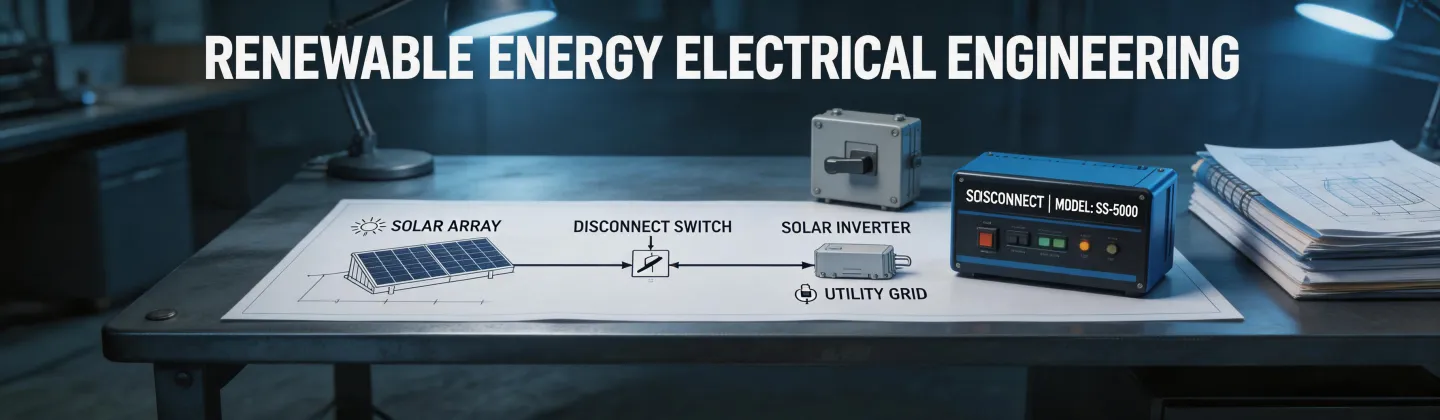
Let me give you a concrete example. The ABB fusible disconnect switch is a boring component. It sits between the battery rack and the power conversion system, and when it's working, nobody remembers it exists. But it's exactly where reliability decisions get made.
Earlier this year, my team received a batch for a grid-scale storage project in Southeast Asia—outdoor, tropical, salt air, relentless humidity. The contact resistance on a sample batch came in above our specified tolerance. The vendor pushed back, politely at first, arguing the parts were "within industry standard." They were, technically. But industry standard assumes a controlled indoor environment. This site was the opposite of that.
We rejected the batch. The vendor redid it at their cost. The project slipped six weeks, and I caught the blame. But three months later, that same vendor sent me a field report from a different site that used a comparable switch: contact failure, arcing, extended downtime. The operator's losses ran well into six figures. I do not say this to gloat—I say it because the pattern is too consistent to ignore.
I learned this lesson the hard way, too. Early in my role, I approved a batch without fully verifying the environmental rating—the paperwork looked fine, and I wanted to keep the project on schedule. The defect ruined 8,000 units in storage conditions. That mistake cost us a $22,000 redo and a delayed launch. Everyone had told me to verify environmental specs before approving. I only truly believed it after ignoring that advice once and eating the consequences.
An Outdoor EV Charger Installation in Chicago Confirmed the Pattern
This pattern isn't limited to battery storage. I do not work on EV charging infrastructure directly—my lane is storage and power conversion. But in late 2024, an integrator asked me to review an outdoor EV charger installation in Chicago after a winter failure.
The story was predictable, but no less frustrating for it. The crew had used an indoor-rated disconnect switch on an outdoor-rated charger. At 14°F, the contact mechanism froze. The charger was down for eighteen days during a stretch when the city needed every working unit.
On paper, the installation met code. The charger was certified. The one detail nobody caught was the environmental rating on a component that cost less than the labor to install it (surprise, surprise).
Now scale that pattern to a 500 MWh storage site. A single mis-specified component doesn't take down one charger—it can take down an entire string, or worse, create a safety event. When a market is building gigawatt-hours at speed, these small details scale from "annoying" to "existential." It's sorta like the industry keeps betting that next time, the weather will be nicer.
So, Is APAC Going to Overtake California? Yes. But Let's Talk About What "Overtake" Means.
Analysts are right that Asia Pacific is to overtake California battery storage by the late 2020s. California faces interconnection queues, land constraints, and a permitting environment that slows expansion. The Asia Pacific region has fewer brakes and a stronger manufacturing base. The overtaking is very likely.
But there's a difference between nameplate capacity and durable capacity. A gigawatt of storage that degrades into warranty disputes is not the same as a gigawatt that delivers two decades of dependable service. The first creates headlines. The second creates value.
I'd argue that the market that wins the durable-capacity race will be the one that treats component quality as infrastructure—enforced specs, third-party verification, and procurement teams allowed to reject "good enough." I've seen this work: in 2023, an Australian engineering firm we supply implemented a verification protocol for every protective device entering their projects. First-pass acceptance was around 60%. Within three quarters, it hit 94%—because vendors learned they couldn't ship marginal parts to that client. That protocol added maybe 2% to upfront component costs. It saved them from field failures that routinely cost ten times more.
What I'd Actually Recommend
Now for the caveat that most "quality-first" articles conveniently skip.
If you're building a short-duration, indoor, climate-controlled storage facility with strong maintenance access, you do not need the most heavily certified components on the market. Standard components with standard verification will serve you fine. I've reviewed those projects and approved them. Not everything needs to be built to the same standard.
But if you're building outdoor grid-scale storage in a challenging environment—tropical humidity, desert heat, or a real winter—the environmental specs and component quality matter more than the price difference. And if you're managing a portfolio of projects across diverse climates, you need a system for tracking which specs apply where.
From my perspective, that system is the missing piece in a lot of APAC expansion plans. The engineering talent is there. The project pipelines are real. But the quality infrastructure—the verification protocols, the environmental spec libraries, the discipline to reject a non-conforming batch even when the schedule hurts—is still catching up.
The Bottom Line
So yes: the Asia Pacific stationary battery storage market is going to overtake California battery storage. That's a good thing for the energy transition.
But capacity alone isn't the win. Reliable capacity is. In my experience, reliability isn't determined at the ribbon-cutting—it's determined months earlier, in procurement reviews and quality inspections that nobody writes press releases about.
I've been the person who rejects batches and slows projects down. I've signed off on the redo that delayed a launch. And I've seen the field reports that confirm, again and again, that the boring details were the ones that mattered.
The APAC market will overtake California. The only question is whether it'll be built to last. Based on what I've seen, I'd say the region has every chance—if it can resist the shortcut that "fast and cheap" always offers.
Renata Silva
Renata Silva is a photovoltaic module analyst covering monocrystalline solar panels, bifacial modules, TOPCon and heterojunction designs, glass-glass construction, junction boxes, and module warranties. She interprets IEC 61215 and IEC 61730 evidence while comparing rated power, conversion efficiency, temperature coefficient, bifaciality, insulation, mechanical-load results, degradation assumptions, and tolerance. Her technical guides help EPC engineers, distributors, and project buyers separate qualification evidence from site-specific energy yield, climate exposure, installation constraints, and long-term performance risk.