The call that started it
On a Thursday afternoon in May 2024, I got a call from an event producer who was about to have a bad weekend. Their headline act's sound engineer had tested the on-site power setup and declared it unusable. The 4kWh portable power station they'd bought six months earlier was supposed to run the medical tent and charge radio mics. It did run, but the output was a modified sine wave, and it made the PA hum and one of the digital monitors throw an error code. They needed a power inverter from DC to AC that was clean, reliable, and installed before Saturday load-in. That gave us about 40 hours.
I'm the person they call for those situations. At our renewable energy equipment company, I coordinate emergency deliveries. In the last decade I've handled over 200 rush orders, and a big chunk of them start the same way: someone picked the cheaper inverter the first time. So when the producer asked if they could just grab a $200 inverter from a big-box store and wire it in, I gave them my standard answer: you can, but you might pay for it three times before the season ends.
Why not just rent a generator?
The festival was in a county park with a 65 dB noise limit after 6 PM. A diesel generator would have been a complaint magnet. Solar was the right answer, but solar isn't a plug-and-play miracle if you're in a hurry. Here's the part people forget when they ask how to charge solar generator setups: a 4kWh portable power station and a 400W solar array need about five good sun hours to add 2kWh back into the battery. From empty, that's almost two full days of charging under perfect conditions. The producer had less than two days, and their existing panels were wired in a way that kept the charge controller from turning on. We had to fix that too.
Building the system: inverter, disconnect handle, and ABB support
We could have sold them another all-in-one 4kWh portable power station and hoped for the best. But all-in-one units are hard to service. If the inverter dies, you send the whole unit back. If the battery degrades, you send the whole unit back. For a professional event, that's not a power solution; it's a brick with a handle.
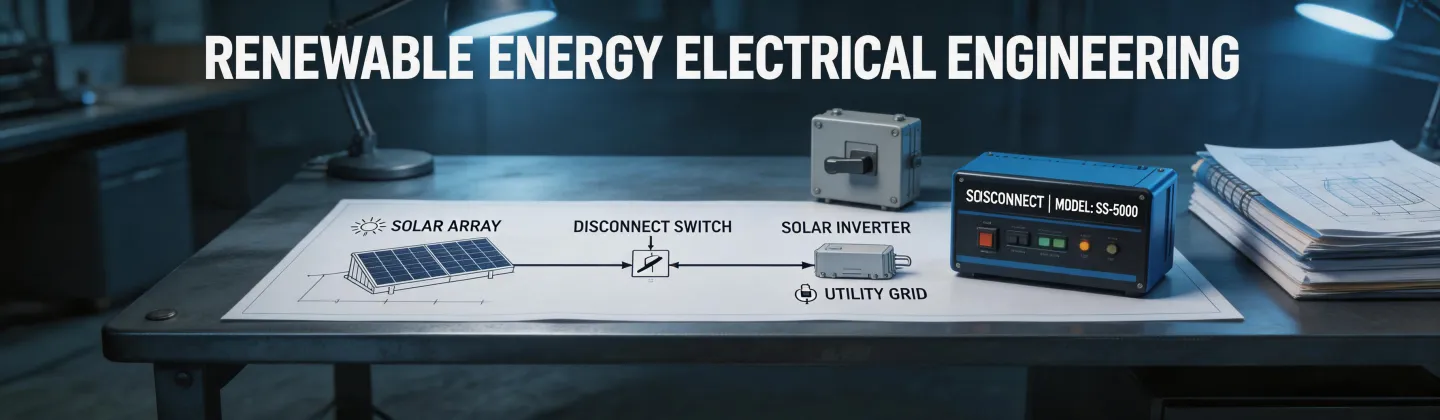
So we went modular that Friday morning. The core was a 4kWh LiFePO4 battery bank. Next to it went an ABB pure sine wave inverter, rated at 3000W. The power inverter from DC to AC was the centerpiece: it took the 48V DC bank and produced clean 120V AC for the soundboard, the medical tent, and the charging station for the wireless mics. And between the battery and the inverter, we installed an ABB disconnect handle.
Before ordering, I called ABB support at 5:15 PM. The engineer asked for the battery bank voltage, the distance between the battery and inverter, and the surge rating of the loads. He confirmed the exact model of the ABB disconnect handle and the torque settings for the DC cable lugs. That twenty-minute phone call saved us at least two delivery cycles because I also asked for the PV input voltage range for their solar charge controller. That spec sheet turned out to be the answer to the client's original charging problem.
The moment I almost lost the schedule
The next morning, the client's electrician looked at the ABB disconnect handle and said, 'We don't have time for this. We'll wire the inverter straight to the battery with an inline fuse and a switch.'
I get it. Inline fuses and switches are common. But on a 4kWh battery bank, the short-circuit current can be vicious. A disconnect handle is not just a switch; it's a rated switch. It is designed to break a live DC circuit without pulling an arc that melts your hand or starts a fire. We spent twenty minutes mounting the ABB handle. That's the best twenty minutes of the entire job.
Also, the festival inspector chose that exact moment to walk in. The electrical inspector saw the ABB disconnect handle, the labeled cabling, and the ABB inverter, and he didn't ask a single question. He signed off. If we had tried to explain an inline fuse to him, we might have spent another three hours not doing a show.
What it actually cost
Here's the math I like to show people who think value and price are the same thing. The client's original plan would have saved about $350 on hardware. The ABB inverter cost more than a no-brand inverter. The ABB disconnect handle added another layer. The total bill for the new system was around $2,850.
Then I priced the alternative: a 10kW diesel generator rental for the weekend was $1,100, plus fuel and delivery, plus the risk of a noise complaint that could shut the show down. The modular 4kWh portable power station paid for itself in one weekend because they didn't need that rental. The sound engineer got clean power. The medical tent got reliable power. And the client learned why you don't put a $2,000 soundboard behind a $200 inverter.
That's not a sales pitch. It's arithmetic. In my experience managing more than 200 rush orders, the lowest quote has cost us more in about 60% of cases. Sometimes it's a failed part. Sometimes it's the electrician needing to redo the wiring. Either way, the 'savings' evaporates fast.
How to charge a solar generator the right way
One last thing, because I know people will search this later. Learning how to charge solar generator systems is not complicated, but it has rules. You have to know the maximum PV input voltage, the minimum start-up voltage, and the polarity of your array. The producer's original system had too many panels in series. The voltage was above the charge controller's maximum input, so the charger shut down. We rewired the array from series to series-parallel and suddenly it worked.
If you're trying to charge a 4kWh portable power station from solar, don't just plug in whatever panels you have. Check the charge controller's spec sheet first. The ABB support team sent us a voltage range document that made the whole repair obvious. That's a hidden benefit of buying from a brand with real documentation and real support. The no-name product might work for a while, but when it doesn't, you're alone.
The takeaway
So, would I do it again? Yes, but not because it was easy. I did it because the client was open to hearing why safety and clean power are non-negotiable. The 4kWh portable power station is still running shows today. The ABB disconnect handle is still there, doing what it's designed to do. And the next time someone asks me for the cheapest power inverter from DC to AC, I'll tell them this story.
Sometimes the fastest way to the right answer is to slow down, make a phone call, and buy the part that won't set your schedule on fire.

Renata Silva
Renata Silva is a photovoltaic module analyst covering monocrystalline solar panels, bifacial modules, TOPCon and heterojunction designs, glass-glass construction, junction boxes, and module warranties. She interprets IEC 61215 and IEC 61730 evidence while comparing rated power, conversion efficiency, temperature coefficient, bifaciality, insulation, mechanical-load results, degradation assumptions, and tolerance. Her technical guides help EPC engineers, distributors, and project buyers separate qualification evidence from site-specific energy yield, climate exposure, installation constraints, and long-term performance risk.