If you're pricing an ABB microgrid or an ABB EV charger for a commercial building, here's the bottom line: the quote that itemizes everything up front costs less than the one that looks cheap on page one. I've been the office administrator for a 120-person engineering company since 2020, and I manage roughly $400k in annual facility purchases across 12 vendors. I've processed about 80 equipment orders. In our 2024 vendor consolidation, we cut our vendor list from 18 to 8. That project taught me more about power equipment than I expected—and the biggest lesson was about transparency, not hardware.
If you've ever compared quotes for charging infrastructure, you know the feeling: the first number looks great, then freight, permits, and "coordination services" appear. I've learned to ask "what's NOT included?" before "what's the price?" The vendor who lists all fees upfront—even if the total looks higher—usually costs less in the end. Trust me on this one.
Why I trust ABB for microgrid and EV charging
I'm not an electrical engineer, so I can't speak to the internals of the ABB inverters or the microgrid controller. What I can tell you is what it's like to buy and install them for a mid-size office. We chose ABB for two reasons: the spec sheets included the details I needed, and the local service rep answered the "what's extra?" question before I asked.
Take our 2024 project. We ordered two ABB EV chargers and an ABB microgrid controller for a facility serving 400 employees across 3 locations. The ABB quote listed line items like "network setup" and "coordination study" separately. Another vendor's base quote was 7% lower. Actually, maybe 5%—I'd have to pull the spreadsheet. But by the time we added freight, commissioning, and network penetration testing, the gap was under 1%. That's not a coincidence; that's procurement.
The most frustrating part of buying power equipment: the same questions keep coming up even after specs are signed. You'd think written requirements would prevent surprises, but interpretation varies wildly. The no-brainer fix was to switch to vendors who put everything in writing.
The first ABB EV charger we installed was the ABB Terra AC wallbox for a two-bay office lot. The hardware price was competitive, but the real cost drivers were panel capacity, cabling, and load management. If you're only comparing charger list prices, you're missing the expensive part.
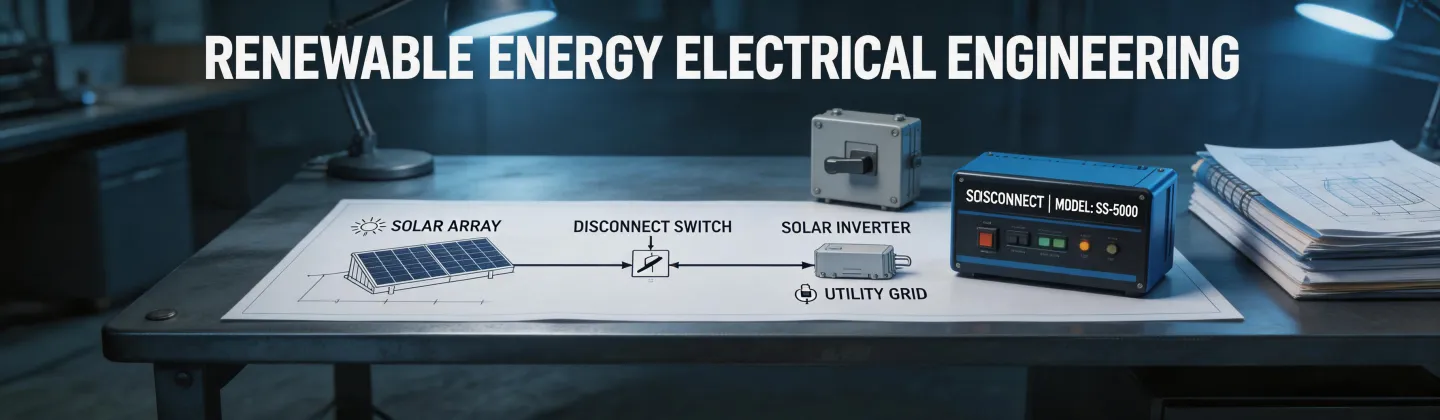
That install also taught me why "microgrid" is not a single product. An ABB microgrid ties together solar inverters, batteries, EV chargers, and the building's loads. If you treat it as one SKU, you'll be surprised by the engineering time. The ABB quote included the system design review, which was a significant line item. The vendor who left that out seemed cheaper until we asked them to actually design the interconnection.
In that design review, I learned that the microgrid controller is almost more important than the battery. It decides when to charge, when to discharge, and when to island the building. That's why the ABB microgrid documentation impressed me: it described those modes in plain language, not just marketing.
What "the best surge protector" really means
The phrase I hear most in our industry is "we have the best surge protector." I have a standard response: what's it protecting, and from what? For our office building, the best surge protector is one that matches the facility's voltage profile and fault current rating. ABB makes surge protection devices that work in many commercial settings, but "best" without a data sheet is a red flag.
Per FTC guidelines (ftc.gov), claims must be truthful, not misleading, and substantiated. If a vendor says "best surge protector," ask for the test report and the standard it was tested to.
I'm not a lawyer, so I'll leave the compliance details to the legal team. From a purchasing perspective, an unproven "best" claim tells me the vendor hasn't thought about my building's specific risk. And when I say "ask for the standard," I mean the actual test. A surge protector's job is to clamp a voltage spike and route it to ground. If the vendor can't show the clamping voltage or the withstand rating, the product is just a box with a brand name.
The "definition of energy storage molecule" lesson
During the same project, I ran into the phrase "energy storage molecule" in a technical brief. I needed a definition of energy storage molecule that made sense to a non-chemist. In renewable energy, an energy storage molecule usually means something like hydrogen (H2) or ammonia (NH3) that stores energy chemically for later use. That's different from what's inside a lithium iron phosphate battery, which stores charge in a solid cathode, not a free molecule in the everyday sense. I had to ask our engineering team to translate the spec before I could evaluate the quote.
Don't let a phrase you don't understand become a hidden requirement. Ask the engineer or the vendor to explain it in terms of what you're buying and what it costs. If they can't, that's a deal-breaker. That's not a chemistry lesson for procurement; it's a warning to ask for plain-English definitions before signing. The same discipline applies to storage. When a vendor says "lithium battery," I need to know the chemistry, the cell manufacturer, and the management system. ABB's offering was specific. The alternative was vague. Vague is not cheaper; it's just vague.
What the Victron LiFePO4 voltage vs state of charge table told me
When I compared battery storage options, the most useful reference was Victron's LiFePO4 voltage vs state of charge table. I'm not a battery engineer, but the table made one thing clear: LiFePO4 has a flat voltage curve in the middle. A voltage reading of around 13.2V on a 12V battery could mean 30% or 80% state of charge, depending on load and resting time. That's why the ABB system we picked doesn't rely on voltage alone to estimate state of charge—it uses battery management software. If a vendor only gives you a voltage table and no management system, that's worth questioning.
That table also helped me understand why some quotes were so different. Batteries aren't just storage boxes; the control software is where a lot of the value lives. Saying "we include the battery" without saying how it's managed is like saying "we include the engine" without saying how it's tuned.
Where my experience stops
My experience is based on about 80 orders, mostly for commercial offices and light manufacturing. If you're working on a utility-scale microgrid, a data center, or a site with unusual power quality needs, get a proper engineer involved. This isn't one size fits all.
Also, nobody should promise you 100% uptime for every power product. We chose ABB because of their service network and clear documentation, not because any equipment is infallible. Trust vendors who tell you what can fail and how you'll know.
One more caveat: my sample is small. We did one microgrid and two EV charger installations. If you're doing a larger fleet rollout or a multi-building campus, you'll want to talk to an integrator who has done that scale. The transparency lesson stays the same, but the technical details won't.

Jane Smith
I’m Jane Smith, a senior content writer with over 15 years of experience in the packaging and printing industry. I specialize in writing about the latest trends, technologies, and best practices in packaging design, sustainability, and printing techniques. My goal is to help businesses understand complex printing processes and design solutions that enhance both product packaging and brand visibility.